
Big Score Boost: Thousands of CBSE Class 10 and 12 Students See Marks Rise in Re-Evaluation Results
A Crucial Lifeline Ahead of Admissions
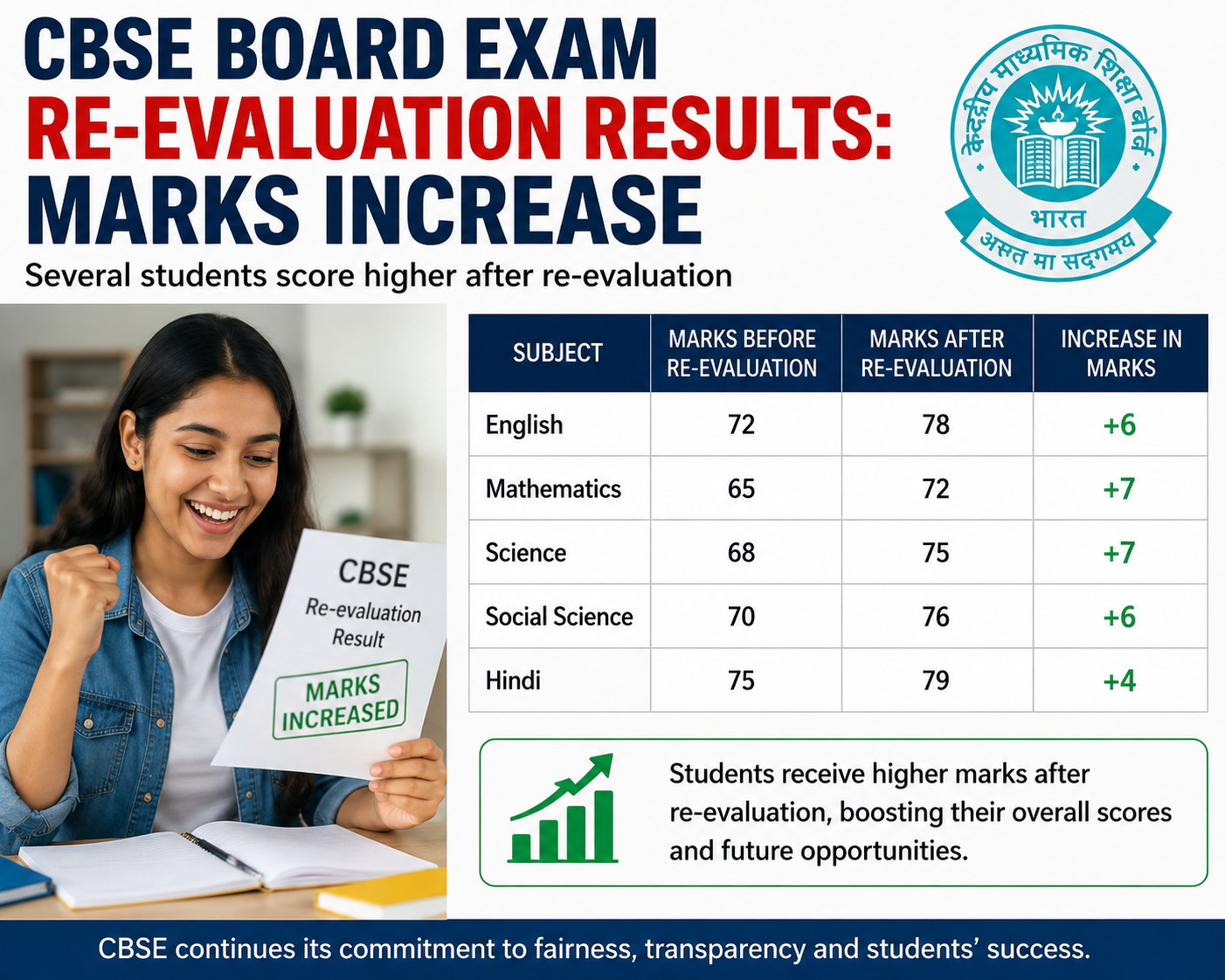
The declaration of the re-evaluation and verification results marks a massive turning point. This update impacts thousands of Central Board of Secondary Education (CBSE) students whose initial board grades were unsatisfactory. Students followed the standard three-step grievance process. This routine includes verifying marks and obtaining photocopies of evaluated answer books. Finally, applicants request the re-evaluation of specific questions. Through this method, the board successfully corrected systemic grading slips.
Reports from various regions highlight significant shifts in student aggregates. Many students who fell short of the coveted 90% or 95% brackets by just a few marks have now crossed those thresholds, completely altering their eligibility for competitive college streams and merit-based scholarship programs.
How the Marks Re-Evaluation Works
The board follows a strict protocol to ensure fairness during this critical rectifying window:
- The Correction Margin: Any change in marks—even an increase of a single mark—is accepted by the board, and a fresh mark sheet is issued.
- Decreased Scores: In rare cases, a student’s marks decrease after re-evaluation. Consequently, the lower marks are considered final. However, the vast majority of applicants in this round saw positive increases.
- Furthermore, all revised scores are instantly mapped onto the central database. This automation helps students avoid delays during ongoing counselling sessions.
Students can easily verify their updated status by logging onto the official CBSE Results Portal using their original roll number, school number, and admit card ID.
Instant DigiLocker Updates for Students
To avoid logistical delays in courier services, CBSE has seamlessly integrated the updated scorecards with the central DigiLocker Platform. Students whose marks the board has amended can instantly access, download, and print their legally valid, digitally signed fresh mark sheets.
This digital-first approach ensures that students can immediately submit their authentic, revised credentials to universities and higher secondary institutions without waiting for physical hard copies to arrive at their respective schools.
Conclusion
The completion of this CBSE re-evaluation phase brings clear justice to thousands of hardworking students. Initial errors highlight the immense pressure placed on examiners during bulk evaluation. However, the board’s transparent, multi-tiered rectifying mechanism successfully restored student confidence. Academic admissions are now heating up across India. Consequently, these extra marks will play a decisive role in shaping future student trajectories. Candidates simply refused to let an evaluation error define their hard work.