
SUPREME COURT BAR LEADER OPPOSES RAHUL GANDHI’S OCTOBER 12 MARCH TO SUPREME COURT, WARNS AGAINST POLITICAL PRESSURE ON JUDICIARY
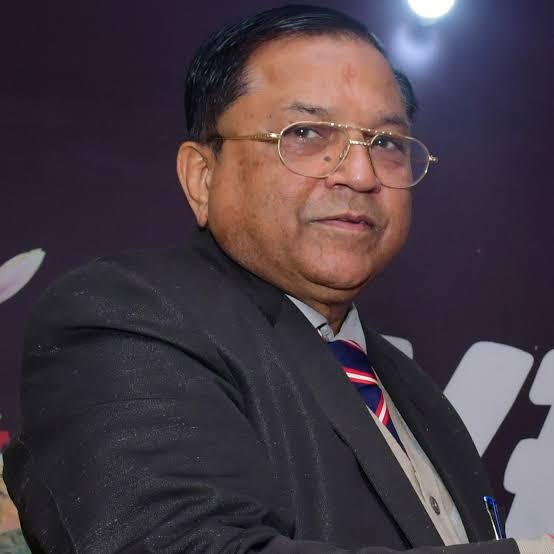
DR. ADISH C. AGGARWALA URGES RAHUL GANDHI TO WITHDRAW PROPOSED MARCH, SAYS FRESH INDIAN EXPRESS REVELATIONS MAY PROVIDE GROUNDS FOR A NEW PARLIAMENTARY MOTION TO REMOVE CHIEF ELECTION COMMISSIONER
New Delhi, October 11: The October 12 March of Opposition leaders to the Supreme Court to submit a memorandum to the Chief Justice of India demanding the resignation of Chief Election Commissioner (CEC) Gyanesh Kumar has drawn strong objections on constitutional grounds, with a senior Supreme Court Bar leader warning that such an exercise would exert undue political pressure on the judiciary and interfere with pending judicial proceedings.
In a letter to Leader of the Opposition Rahul Gandhi, Dr. Adish C. Aggarwala, Senior Advocate, Chairman of the All India Bar Association and former President of the Supreme Court Bar Association, has urged him to withdraw the proposed march and instead consider initiating a fresh parliamentary removal motion in light of new documentary revelations reported by The Indian Express.
“A march by Opposition leaders to the Supreme Court, accompanied by the submission of a memorandum to the Hon’ble Chief Justice of India concerning politically contentious issues connected with pending judicial proceedings, will undoubtedly exert undue political pressure upon the judiciary and constitute direct interference with the independent judicial process,” Dr. Aggarwala, who earlier served as Vice-Chairman of the Bar Council of India, stated.
He emphasised that judicial proceedings must remain free from political pressure and external interference and that the independence of the judiciary must be protected at all costs.
CJI HAS NO ADMINISTRATIVE AUTHORITY TO SECURE CEC’S RESIGNATION
Dr. Aggarwala pointed out that the Chief Justice of India, acting in his administrative capacity, has no constitutional authority to direct the Chief Election Commissioner to resign or to remove him from office.
He maintained that any grievance concerning the legality of the Election Commission’s actions must be pursued through appropriate judicial proceedings before the competent Bench rather than through a political memorandum addressed to the Chief Justice.
“The office of the Chief Justice of India commands the highest constitutional respect and public confidence,” he observed, adding that its dignity, independence and institutional neutrality must be preserved.
FRESH INDIAN EXPRESS REVELATIONS MAY PROVIDE GROUNDS FOR NEW REMOVAL MOTION
Referring to the recent investigative reports published by The Indian Express, Dr. Aggarwala stated that the fresh documentary revelations, if true, could provide new material for initiating parliamentary proceedings seeking the removal of the Chief Election Commissioner.
He recalled that earlier removal notices, supported by 130 Lok Sabha Members and 63 Rajya Sabha Members, were rejected on April 6, 2026, by Lok Sabha Speaker Om Birla and Rajya Sabha Chairman C.P. Radhakrishnan, who declined to admit them under Section 3 of the Judges (Inquiry) Act, 1968.
However, Dr. Aggarwala observed that the subsequent investigative reports published by The Indian Express had brought to light significant new material that was not before the Presiding Officers when the earlier notices were rejected.
“In view of the rejection of the earlier removal motions, you and other Opposition leaders may now submit a fresh notice of motion seeking the removal of the Chief Election Commissioner, supported by the newly disclosed evidence and specific allegations capable of establishing a prima facie case of misbehaviour or incapacity,” he wrote to Rahul Gandhi.
SPEAKER AND RAJYA SABHA CHAIRMAN MAY NOW FIND SUFFICIENT GROUNDS TO ADMIT FRESH MOTION
Dr. Aggarwala explained that Article 324(5) of the Constitution provides that the Chief Election Commissioner can be removed only in the same manner and on the same grounds as a Judge of the Supreme Court.
Under the constitutional framework read with the Judges (Inquiry) Act, 1968, a removal motion requires the signatures of at least 100 Lok Sabha Members or 50 Rajya Sabha Members.
He emphasised that the rejection of earlier notices does not, by itself, prevent consideration of a fresh notice based on substantial new evidence.
“If the reported evidence is authentic, material and establishes a prima facie case of misbehaviour attributable to the Chief Election Commissioner, the Hon’ble Speaker of the Lok Sabha or the Hon’ble Chairman of the Rajya Sabha may now find sufficient grounds to admit the fresh notice of motion under Section 3 of the Judges (Inquiry) Act, 1968, notwithstanding the rejection of the earlier notices,” Dr. Aggarwala stated.
He clarified that the admission of a removal motion and the final establishment of proved misbehaviour or incapacity are distinct stages. Following admission, the allegations are examined through the prescribed statutory process, including an inquiry by a three-member committee, before any parliamentary action for removal can be considered.
RAHUL GANDHI HAS SUFFICIENT PARLIAMENTARY SUPPORT TO INITIATE FRESH PROCEEDINGS
Dr. Aggarwala further observed that Rahul Gandhi, as Leader of the Opposition, has sufficient parliamentary support within the Congress and other INDIA bloc parties to secure the requisite signatures for initiating a fresh removal motion, subject to the willingness of the Members concerned.
He argued that the availability of a constitutional mechanism, particularly in light of the newly reported documentary evidence, provides an alternative to organising a march to the Supreme Court.
“In these circumstances, when a specific constitutional mechanism is still available and fresh documentary material has reportedly emerged, there is no justification for approaching the Hon’ble Chief Justice of India on the administrative side to seek the resignation of the Chief Election Commissioner, instead of considering a fresh parliamentary removal motion supported by the new evidence,” he wrote.
KEEP THE OFFICE OF THE CHIEF JUSTICE ABOVE POLITICAL CONTROVERSIES
Dr. Aggarwala stressed that while the Opposition has a democratic right to question constitutional authorities and demand accountability, it also has a responsibility to protect the independence and dignity of the judiciary.
He cautioned against drawing the office of the Chief Justice into a political controversy concerning the resignation of another constitutional functionary.
Concluding his letter, Dr. Aggarwala urged Rahul Gandhi to withdraw the proposed October 12 march to the Supreme Court and instead consider submitting a fresh parliamentary removal notice supported by the newly reported documentary evidence.
“Such a decision would reinforce public confidence in the independence of the judiciary, uphold the constitutional principle of separation of powers and demonstrate respect for the dignity of our democratic institutions,” he stated.
(Dr. Adish C Aggarwala)
Senior Advocate
Chairman, All India Bar Association
Ex. President, Supreme Court Bar Association
Ex. Vice-Chairman, Bar Council of India
Mobiles : +(91) 9958177904, 9868510674, 9289758890, 9217673328