
Inflation Blow: Petrol Crosses ₹100 Mark in Delhi Amid Fourth Consecutive Price Hike in 10 Days
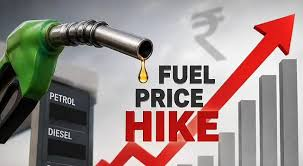
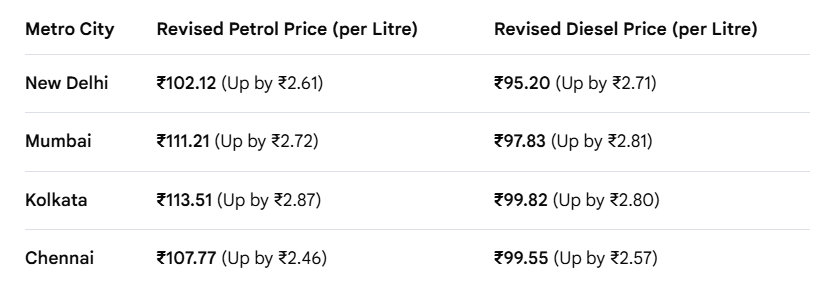
Sending shockwaves through household budgets, petrol prices have officially breached the critical ₹100 per litre mark in New Delhi. State-owned oil marketing companies announced a steep fuel price hike on May 25, 2026. This marks the fourth domestic fuel revision within just ten days. The sudden surge has ignited multi-city anxieties regarding a wave of high retail inflation, dealing a heavy blow to the common public. The latest revision saw standalone prices of petrol spike by up to ₹2.61 per litre. Furthermore, this brings the cumulative increase to approximately ₹7.5 per litre across four brief tranches since mid-May.
The Triple-Digit Reality: Current Fuel Rates Across Major Metros
State freight costs and local Value Added Tax (VAT) structures vary significantly. Consequently, pump rates differ drastically across regions. Furthermore, as a direct result of the latest dynamic pricing adjustments, fuel prices across India’s four major metro cities reached historic levels. Ultimately, this has pushed domestic fuel rates to unprecedented heights.
What is Fueling the Domestic Price Explosion?
According to public financial notifications issued by fuel retailers, India is directly bearing the brunt of severe international energy market shocks.
- Global benchmark crude oil prices have climbed past the critical $100 per barrel mark because of global market pressures.
- Consequently, global benchmark crude oil prices have climbed past the critical $100 per barrel mark. Specifically, worsening geopolitical conflicts in the Middle East and shipping logjams primarily fuel this escalation.
- In addition, the crisis has extended beyond liquid fuels. For instance, northern states hiked Compressed Natural Gas (CNG) prices. As a result, this adds a cumulative burden of ₹4 per kg on transit and cargo vehicles.
- Meanwhile, industry monitoring bodies report that local oil marketing companies (OMCs) still absorb significant losses despite these steep hikes. Ultimately, they are heavily under-recovering production costs to buffer the local economy against raw global numbers.
The Looming Threat of Retail Inflation
Economists warn that the rapid surge in fuel costs will trigger a severe domino effect across the wider consumer market. Higher diesel costs translate directly to an immediate spike in commercial transport freight and agricultural cultivation costs. Daily transport and logistics costs drive up the prices of essential goods. In addition, buyers now face higher costs for milk, vegetables, and groceries because of this. This comes at a precarious time, as India’s retail inflation was already creeping upward alongside wholesale prices.
Conclusion
The breach of the ₹100 petrol barrier in the national capital serves as a stark reminder of India’s heavy exposure to volatile international energy supply lines. Rising transport and kitchen costs squeeze the monthly disposable income of the common citizen. They bear the ultimate impact of rising procurement costs, driven by global macroeconomic conflicts. Global crude supply disruptions and tax structures pressure the domestic economy. It will face prolonged, intense inflation without supply stabilisation or strategic tax relief.
It’s really hitting hard right now, seeing these constant increases. Makes you wonder how much longer people can manage.