China’s Air Force Humiliated: Taiwan ‘Viper’ Locks Missile on Chinese J-16 During Drills
Leaked Footage Exposes Tactical Gap in PLAAF Defenses; Taiwan’s F-16V Uses ‘Sniper Pod’ Tech to Target Chinese Jet Without Triggering Radar Alarms
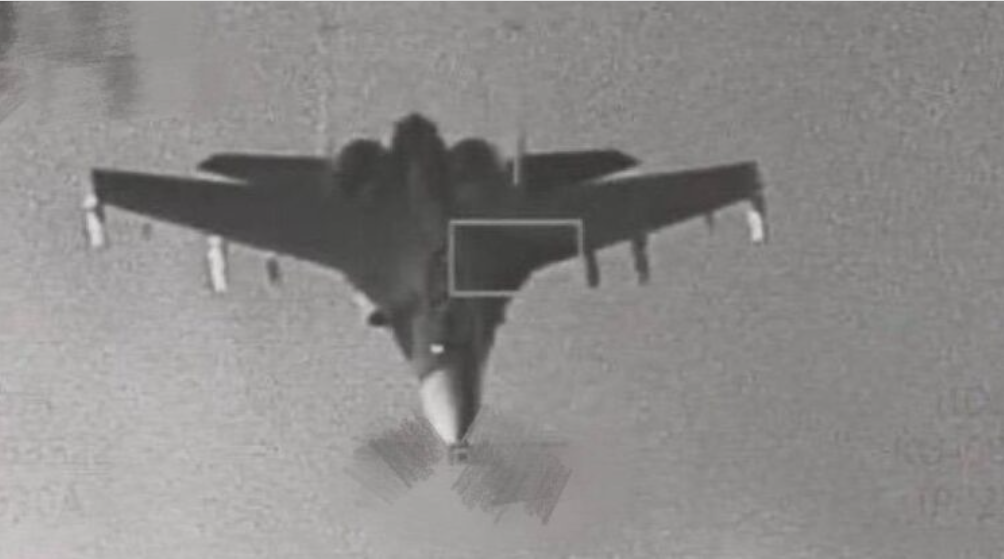
TAIPEI/BEIJING — The balance of power in the Taiwan Strait faced a startling reality check this week. As Beijing launched its “Justice Mission 2025” exercises—a live-fire simulation of a total island blockade—Taiwan retaliated not with words, but with high-tech proof of its defensive capabilities. The Republic of China Air Force (ROCAF) released sensational footage showing an F-16V (Viper) successfully tracking and “locking on” to a sophisticated Chinese Shenyang J-16 multirole fighter.
The ‘Sniper Pod’ Advantage
What has truly humiliated the People’s Liberation Army Air Force (PLAAF) is the method of the lock. According to defense analysts, the Taiwanese pilot used the AN/AAQ-33 Sniper Advanced Targeting Pod.
- Passive Tracking: Unlike traditional radar which “paints” a target and alerts the enemy’s Radar Warning Receiver (RWR), the Sniper Pod uses electro-optical and infrared sensors.
- The Result: The Chinese pilot likely had no idea that an AIM-9X Sidewinder missile was virtually locked onto his exhaust, creating a scenario where the Chinese jet could have been downed before even realizing it was in a dogfight.
‘Justice Mission 2025’ vs. ‘Resilient Taiwan’
The incident occurred as China deployed over 130 aircraft and 50 vessels to simulate the capture of key ports like Keelung and Kaohsiung. While China’s state media, Xinhua, touted the drills as a “stern punishment” for Taiwan, the ROCAF’s “Resilient Taiwan” video serves as a massive psychological counter-strike. It demonstrates that despite the numerical superiority of the PLA, Taiwan possesses the “asymmetric” technology to inflict devastating losses on China’s elite air units.
Geopolitical Fallout
Strategic experts, including Prashant Dhawan, suggest this humiliation may force Beijing to rethink its air superiority assumptions. Coming on the heels of a record $11.1 billion US arms sale to Taipei and bold military support statements from Japan, the “Viper Lock” incident signals that the Taiwan Strait remains one of the most dangerous and technologically contested airspaces on Earth.