
West Asia War Spirals: Iran Fires Ballistic Missiles at US Bases; Air Raid Sirens Ring Out Across the Gulf
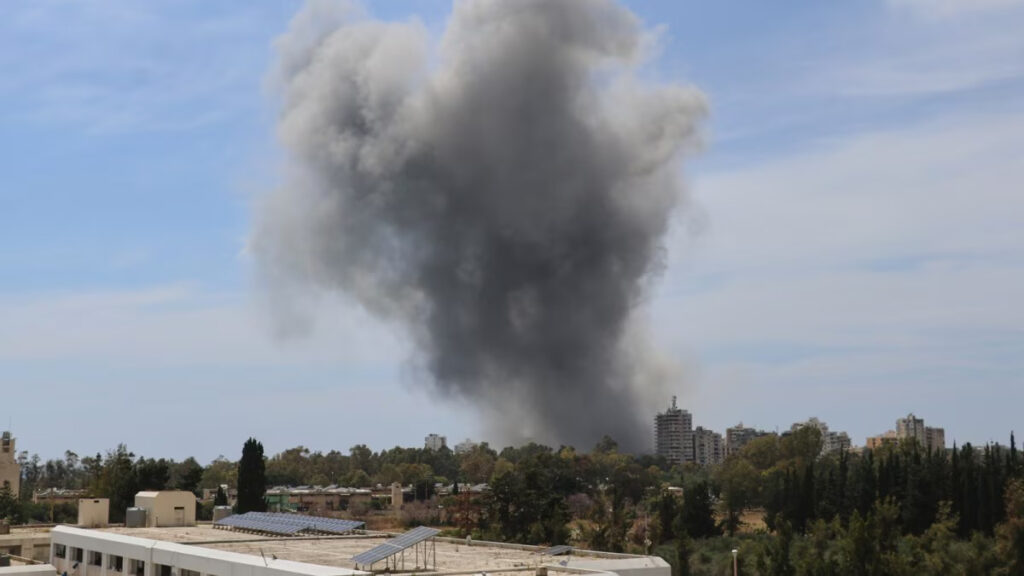
The West Asia conflict has taken a perilous turn. Iran’s Islamic Revolutionary Guard Corps (IRGC) launched coordinated ballistic missile and drone strikes. These attacks targeted United States military assets across the Gulf region. On the morning of June 10, 2026, air raid sirens blared across Bahrain, Kuwait, and Jordan. Consequently, local militaries activated their air defence networks to intercept incoming hostile targets. Soon after, the IRGC claimed immediate responsibility for the escalation. Furthermore, they called it a direct response to a massive wave of US “self-defence” airstrikes. Those American strikes had hit Iran’s southern coast hours earlier.
The Trigger: US Apache Downings and Operation Epic Fury
The recent military escalation follows the crash of an American Army Apache attack helicopter off the coast of Oman on Tuesday.
- The Accusation: US President Donald Trump placed direct blame on the Islamic Republic, asserting that the aircraft was shot down by Iranian forces.
- The US Strike: Consequently, US Central Command (CENTCOM) launched immediate “self-defence strikes.” Using precision munitions from Air Force and Navy fighter jets, the US targeted Iranian air defence systems, ground control stations, and surveillance radar sites near the strategic Strait of Hormuz, causing massive explosions on Qeshm Island and in Bandar Abbas.
Iran Strikes Back: Precision Targets and Interceptions
True to a warning issued by Iranian Foreign Minister Abbas Araghchi that “Iran’s armed forces will leave no attack or threat unanswered,” Tehran executed its response at dawn on Wednesday.
According to initial reports from Al Jazeera, Iran fired long-range solid-fuel missiles and drones toward multiple regional targets. In Bahrain, the IRGC claimed to have launched a drone strike targeting the US Navy’s Fifth Fleet headquarters. Bahrain’s Interior Ministry confirmed that nationwide sirens were sounded twice within an hour, urging residents to move to safe locations.
Simultaneously, the Kuwaiti Army announced that its domestic anti-missile shields were actively engaging hostile aerial targets over its territory. Further west, the Jordanian Armed Forces successfully shot down five Iranian ballistic missiles heading toward the Al-Azraq airbase, preventing damage to hosted F-35 facilities.
Regional Defiance and Economic Shocks
The sudden collapse of the fragile ceasefire has thrown international markets into absolute chaos. Following the cross-border strikes, global oil benchmark futures spiked significantly due to fears of a prolonged blockade in the Strait of Hormuz.
Defiant over the escalation, Foreign Minister Araghchi issued an ultimatum to Western forces via social media, stating, “Leave our region if you want to be safe”. Concurrently, neighboring Gulf Cooperation Council (GCC) states have strongly condemned the strikes as blatant violations of regional sovereignty.
Conclusion
Iran’s synchronised missile barrages across multiple sovereign nations mark an incredibly dangerous turning point in the West Asia war. Tehran targeted American strongholds in Bahrain, Kuwait, and Jordan. Consequently, Iran signalled it will risk a multi-front spillover to counter US pressure. Washington maintains its initial radar strikes are complete. However, the physical impact on Gulf infrastructure will likely force a counter-response. Therefore, regional air defences are locked at maximum readiness. As a result, the international community faces a race against time to prevent a wider conflict.