
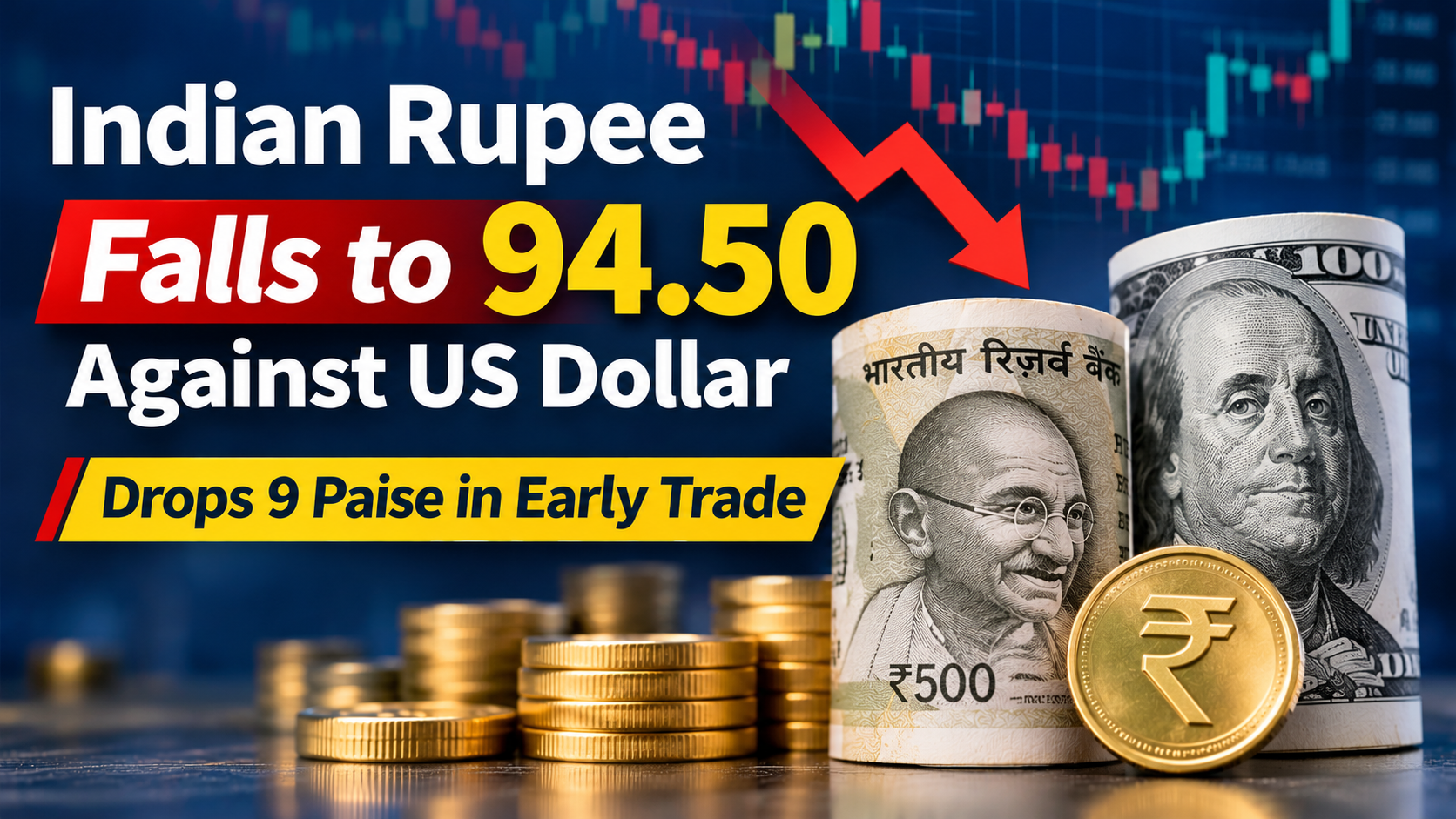
Indian Rupee Falls 9 Paise to 94.50 Against US Dollar
Published: November 6, 2026
Category: Business News | Indian Economy
Byline: Sagufta Rani
The Indian rupee falls against the US dollar by 9 paise to 94.50 in early trading on Friday, November 6, 2026, as a stronger American currency and rising crude oil prices put pressure on the domestic currency. The movement reflects changing global market conditions, with investors closely monitoring oil prices, the US dollar index and foreign investment flows.
According to the early-trading report, the rupee opened at 94.50 against the US dollar, compared with its previous close of 94.41 on Thursday. The currency subsequently recovered slightly to touch 94.36 during initial trade.
The rupee’s performance remains important for India’s economy because exchange-rate movements can influence import costs, international travel expenses, overseas education payments and business operations.
Indian Rupee Falls Against US Dollar: Key Market Updates
The rupee started Friday’s session on a weaker note in the interbank foreign exchange market, declining 9 paise from its previous closing level.
Forex traders attributed the initial pressure to strength in the US dollar and overnight gains in crude oil prices. These factors can affect demand for foreign currency and influence investor sentiment towards emerging-market economies.
The reported market figures were:
- Early-trading exchange rate: ₹94.50 per US dollar
- Previous closing rate: ₹94.41 per US dollar
- Movement: Down 9 paise at the opening
- Dollar index: 101.71, up 0.17%
- Brent crude futures: $100.30 per barrel, up 2.04%
These figures describe the reported early-trading session and are not a confirmation of the final closing exchange rate for November 6.
Why Is the Indian Rupee Falling?
Several domestic and international factors influence the rupee’s movement against the US dollar. The main factors reported during Friday’s early trading session include the following.
1. Stronger US Dollar
The US dollar strengthened against a basket of six major currencies, putting pressure on emerging-market currencies such as the Indian rupee.
The dollar index rose 0.17% to 101.71 during the reported session. A stronger dollar can make it more expensive for Indian businesses and importers to purchase goods priced in US currency.
Investor demand for dollar-denominated assets can also influence currency movements, particularly during periods of uncertainty in international financial markets.
2. Rising Crude Oil Prices
Crude oil prices remain an important factor affecting the Indian rupee because India imports a substantial portion of its oil requirements. Brent crude futures rose 2.04% to $100.30 per barrel in the reported early-trading session.
When international oil prices rise, India’s import bill can increase. Importers may also require more US dollars to pay overseas suppliers, potentially putting additional pressure on the rupee. However, the actual effect depends on international oil prices, exchange-rate movements, domestic demand and other economic conditions.
3. Global Geopolitical Uncertainty
Geopolitical developments can affect global markets by influencing investor confidence, oil prices and international trade. Tensions involving Russia and Ukraine, along with developments in the Middle East, remain among the risks that investors monitor when assessing currency movements.
During uncertain periods, investors may increase their exposure to assets they consider safer, including the US dollar. Such movements can contribute to volatility in emerging-market currencies.
How Does Rupee Depreciation Affect India’s Economy?
A weaker rupee can affect consumers, businesses, exporters and investors in different ways. The impact depends on how long the currency remains weak and how international prices respond.
Higher Import Costs
Imported products such as crude oil, electronics, machinery and industrial raw materials can become more expensive in rupee terms when the currency weakens.
Businesses that depend on overseas suppliers may face higher costs, although the final effect on consumers depends on pricing decisions and other expenses.
Fuel Price Pressure
A weaker rupee combined with higher crude oil prices can increase the cost of importing oil into India.
However, this does not automatically mean petrol and diesel prices will rise immediately. Retail fuel prices also depend on taxes, domestic pricing policies and other market factors.
Overseas Education and Travel Expenses
Indian students paying tuition fees in US dollars may need more rupees to cover the same amount when the currency weakens.
International travellers can also face higher costs for accommodation, shopping and other expenses priced in foreign currencies.
Potential Benefits for Exporters
Exporters receiving payments in US dollars may earn more rupees when converting their foreign earnings into domestic currency.
However, the overall benefit depends on their operating costs, imported materials, currency contracts and the markets in which they operate.
Stock Market and Foreign Investor Activity
Indian equity markets showed mixed movements during early trading on Friday, according to the reported market data. The Sensex rose 33 points to 79,343.06, while the Nifty declined 52.95 points to 24,477.40.
Foreign institutional investors were net buyers of Indian equities on Thursday, purchasing shares worth ₹14,974.68 crore, according to exchange data cited in the report. Foreign investment inflows can support the rupee by increasing demand for Indian assets. However, equity market performance and currency movements do not always move in the same direction.
Investors also monitor crude oil prices, interest rates, international trade and demand for the US dollar when assessing India’s currency outlook. For more updates, readers can explore our [Indian stock market news] (replace with the URL of your existing related article) and [latest Indian economy news] (replace with the URL of your existing related article).
What Is the Outlook for the Indian Rupee?
The near-term outlook for the rupee will depend on movements in the US dollar, crude oil prices, foreign investment activity and geopolitical developments. Anuj Choudhary, Research Analyst at Mirae Asset Sharekhan, expressed a positive near-term outlook for the rupee, citing strength in domestic markets and fresh foreign institutional investment inflows. However, geopolitical tensions could limit the currency’s potential gains.
A weaker US dollar, easing crude oil prices and continued foreign investment inflows could support the rupee. Conversely, sustained oil price increases and stronger demand for dollars could create further pressure.
These factors do not guarantee a particular exchange-rate outcome. Investors and businesses should monitor updated market reports before making financial decisions.
Frequently Asked Questions (FAQs)
1. What was the Indian rupee’s exchange rate against the US dollar on November 6, 2026?
The rupee opened at 94.50 against the US dollar in early trading on November 6, 2026, down 9 paise from its previous close of 94.41.
2. Why did the Indian rupee fall in early trade?
The rupee weakened amid a stronger US dollar and rising crude oil prices. Global geopolitical uncertainty also influenced market sentiment.
3. How do crude oil prices affect the Indian rupee?
Higher crude oil prices can increase India’s import bill and demand for US dollars from oil importers, potentially putting pressure on the rupee.
4. Does a weaker rupee affect Indian consumers?
Yes. A sustained depreciation can increase the rupee cost of imported products, overseas education and international travel. The actual impact depends on other market conditions.
5. Can the Indian rupee recover against the US dollar?
The rupee could recover if the US dollar weakens, crude oil prices decline or foreign investment inflows remain supportive. However, currency movements are uncertain.
What Lies Ahead for the Indian Rupee?
The Indian rupee’s early-trading decline to 94.50 against the US dollar highlights the influence of international currency movements and crude oil prices on India’s foreign exchange market.
The direction of the rupee will depend on changing global conditions, foreign investment activity and domestic economic developments. Consumers, businesses and investors should follow reliable market updates to understand the potential effects on import costs, overseas payments and financial markets.
#IndianRupee #RupeeVsDollar #USDINR #CurrencyMarket #RupeeFall #USDollar #IndianEconomy #ForexMarket #BusinessNews #FinancialNews #RupeeUpdate #MarketUpdates