
Delhi AQI Crosses 300: Asthmatic Man Develops Pneumonia, Family Faces Breathing Issues
Delhi News | Air Pollution Update | Health News
Byline: Sagufta Rani
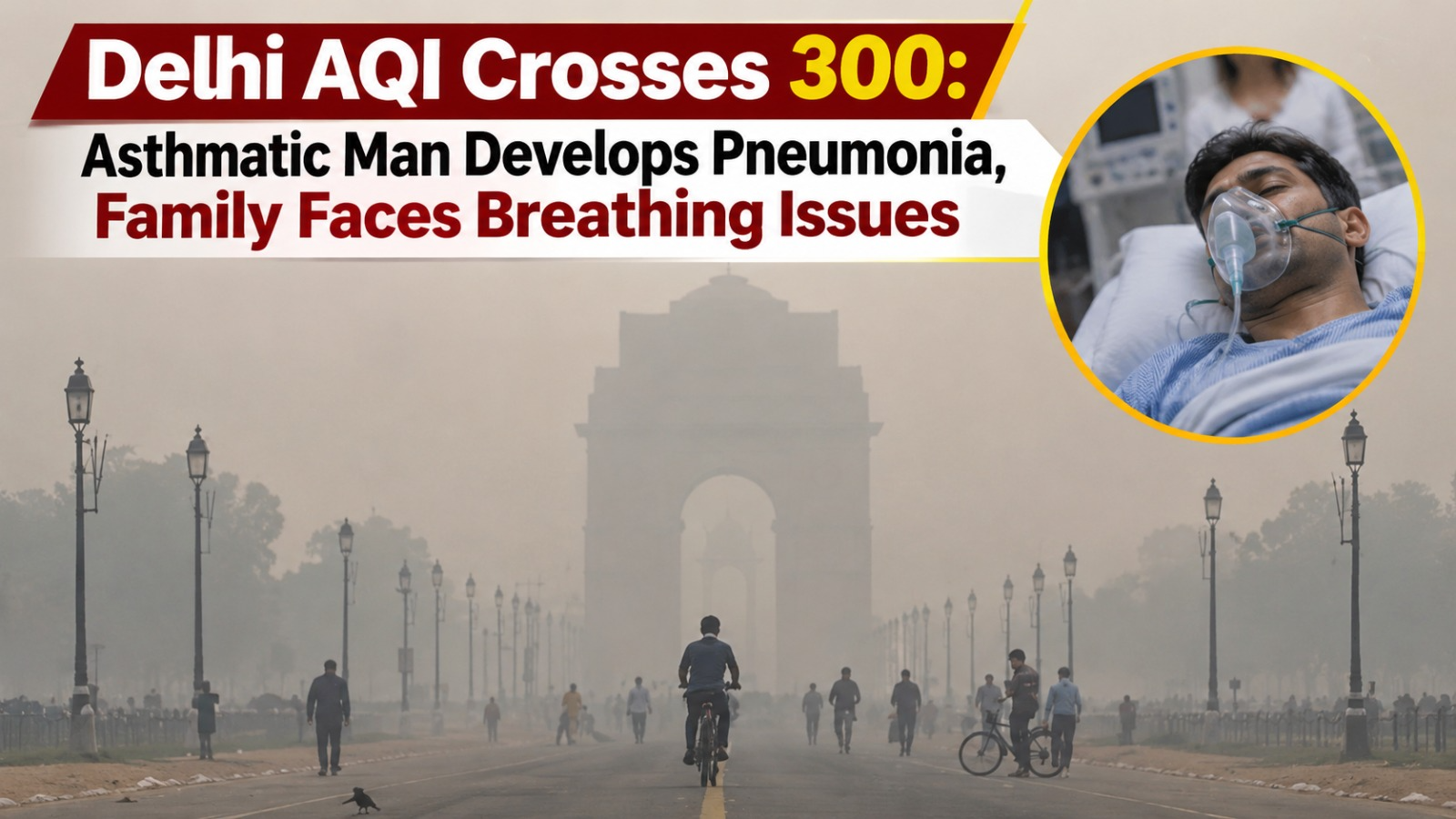
Delhi’s air pollution is becoming a serious health concern as the Air Quality Index (AQI) crosses the 300 mark, putting residents at risk of breathing-related illnesses. The worsening air quality has raised concerns among families, especially those with children, elderly members, and people suffering from asthma or other respiratory conditions.
In a concerning case, an asthmatic man has reportedly developed pneumonia amid worsening pollution levels. His wife and son are also experiencing breathing difficulties, highlighting how poor air quality can affect the health of an entire family.
Delhi AQI Crosses 300 as Pollution Levels Rise
Air pollution continues to create difficulties for people living in Delhi and the National Capital Region (NCR). With the AQI crossing 300, air quality has reached the ‘Very Poor’ category under India’s Central Pollution Control Board (CPCB) classification.
At this level, prolonged exposure to polluted air can cause breathing discomfort, particularly among people with existing respiratory and heart-related conditions. Even healthy individuals may experience irritation in the eyes, coughing, throat discomfort, and breathing problems.
The rising pollution levels have once again raised questions about the need for stronger pollution-control measures and better public awareness.
Asthmatic Man Develops Pneumonia Amid Poor Air Quality
One of the most concerning aspects of the worsening pollution situation is its impact on people who already have respiratory problems.
An asthmatic man has reportedly developed pneumonia, while his wife and son are also facing breathing difficulties. The situation has highlighted the health risks that polluted air can pose to vulnerable individuals and their families.
People suffering from asthma may experience worsening symptoms when exposed to dust, smoke, and harmful airborne particles. However, pneumonia is a medical condition caused by infections, and it cannot be attributed to air pollution alone without a medical assessment.
The incident serves as a reminder that people with respiratory conditions should take extra precautions during periods of severe air pollution.
How Does Air Pollution Affect Human Health?
Poor air quality can affect different parts of the body, particularly the respiratory and cardiovascular systems. Fine particulate matter, especially PM2.5, can enter deep into the lungs and may even enter the bloodstream.
Some common health effects associated with air pollution include:
- Breathing difficulties: Polluted air can make breathing uncomfortable, especially for people with asthma.
- Asthma attacks: Dust and harmful particles can trigger asthma symptoms.
- Persistent coughing: Exposure to polluted air may cause coughing and throat irritation.
- Eye irritation: Smoke and airborne pollutants can cause redness, itching, and watery eyes.
- Heart-related risks: Long-term exposure to air pollution is associated with an increased risk of cardiovascular diseases.
- Respiratory infections: Air pollution can affect respiratory health and may increase vulnerability to respiratory illnesses.
Children, senior citizens, pregnant women, and people with existing health conditions are particularly vulnerable.
Why Is Delhi’s Air Quality a Major Concern?
Delhi regularly faces air pollution challenges, particularly during the winter season. Several factors contribute to worsening air quality, including:
- Vehicle emissions: Cars, buses, trucks, and other vehicles release pollutants into the atmosphere.
- Construction dust: Construction activities and road dust contribute to particulate pollution.
- Industrial emissions: Smoke and pollutants from industries affect air quality.
- Stubble burning: Agricultural residue burning in neighbouring states can contribute to pollution episodes.
- Weather conditions: Low wind speed and temperature inversion can trap pollutants close to the ground.
The combination of these factors can lead to a significant deterioration in air quality.
Safety Tips to Protect Yourself from Delhi’s Air Pollution
When AQI levels remain above 300, residents should take precautions to reduce their exposure to polluted air.
Here are some practical steps to protect your health:
- Avoid outdoor exercise and unnecessary outdoor activities when pollution levels are high.
- Wear a well-fitted N95 mask when going outside.
- Keep windows and doors closed during periods of heavy pollution, while maintaining safe indoor ventilation.
- Use an air purifier with a suitable HEPA filter, if available.
- Check the AQI regularly before planning outdoor activities.
- Follow prescribed medication and treatment plans if you have asthma or another respiratory condition.
- Keep children and elderly family members away from heavily polluted outdoor environments.
People experiencing severe breathlessness, chest pain, or worsening asthma symptoms should seek medical attention immediately.
What Needs to Be Done to Control Delhi’s Air Pollution?
The worsening air quality requires collective efforts from government authorities, industries, and residents. Regular monitoring of pollution sources, better public transport, strict control of construction dust, cleaner industrial practices, and effective waste management can help reduce pollution.
Citizens can also contribute by avoiding unnecessary vehicle use, using public transport, maintaining vehicles properly, and avoiding the burning of waste.
Long-term solutions and consistent implementation of pollution-control measures are essential to improve Delhi’s air quality.
Frequently Asked Questions (FAQs)
1. What does an AQI above 300 mean in Delhi?
An AQI above 300 falls under the ‘Very Poor’ category in India’s air quality classification. Prolonged exposure can cause breathing discomfort and worsen existing respiratory conditions.
2. How does Delhi’s air pollution affect people with asthma?
Air pollution can trigger asthma symptoms such as coughing, wheezing, chest tightness, and difficulty breathing. People with asthma should follow their prescribed treatment and avoid heavy outdoor exposure.
3. Can air pollution cause pneumonia?
Air pollution does not directly cause pneumonia, which is usually caused by infections. However, exposure to polluted air can damage respiratory health and may increase vulnerability to respiratory illnesses.
4. What are the symptoms of breathing problems caused by air pollution?
Common symptoms include coughing, throat irritation, wheezing, chest tightness, eye irritation, and shortness of breath.
5. Which people are most vulnerable to Delhi’s air pollution?
Children, elderly people, pregnant women, and individuals with asthma, lung diseases, or heart conditions are particularly vulnerable to poor air quality.
6. How can people protect themselves when Delhi’s AQI crosses 300?
People should reduce outdoor activities, avoid outdoor exercise, wear a well-fitted N95 mask when outside, check AQI updates, and use a suitable indoor air purifier if available.
Delhi’s Air Pollution: A Growing Threat to Public Health
Delhi’s AQI crossing 300 is another warning about the growing impact of air pollution on public health. The reported case of an asthmatic man developing pneumonia, along with breathing difficulties experienced by his wife and son, highlights the importance of taking respiratory health seriously.
As pollution continues to affect daily life, residents must stay informed, follow safety precautions, and seek medical advice whenever necessary. Improving Delhi’s air quality is not just an environmental responsibility but also an important step towards protecting the health of millions of people.
#DelhiAQI #DelhiAirPollution #DelhiPollution #AQI300 #AirQuality #DelhiNCR #Pneumonia #Asthma #HealthNews #AirPollutionCrisis #PollutionAlert #DelhiNews #BreathingProblems #IndiaNews #BreakingNews