
Delhi Pollution After Diwali: AQI Nears 450 in Sonia Vihar as Severe Smog Hits Capital
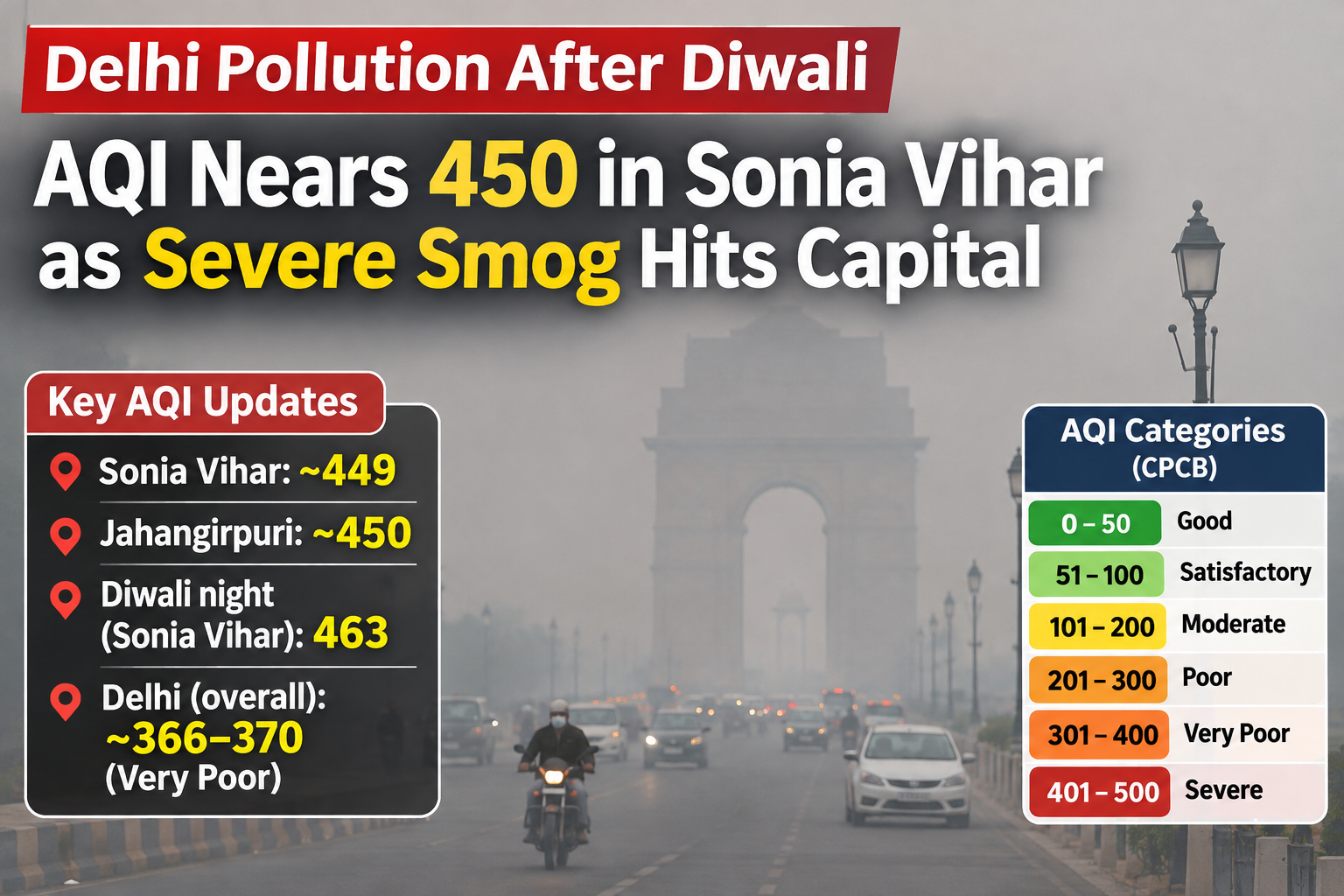
Delhi’s air quality deteriorated sharply on Monday, November 9, as a thick layer of smog covered several parts of the national capital following Diwali celebrations. Sonia Vihar recorded an Air Quality Index (AQI) of around 449 in a morning monitoring snapshot, while multiple other locations reported pollution levels in the severe category.
According to monitoring reports, Delhi’s overall AQI remained around 366–370 in the morning, placing the city in the ‘Very Poor’ category. However, several monitoring stations recorded readings above 400, highlighting the worsening air pollution across the capital.
Delhi AQI Today: Sonia Vihar Records Nearly 450
Sonia Vihar was among the worst-affected areas, recording an AQI of approximately 449 in the morning. Other locations, including Burari Crossing, Vivek Vihar, Jahangirpuri, North Campus, Rohini and Delhi Technological University, also reported severe air quality.
On Diwali night, Sonia Vihar’s AQI had reportedly climbed to 463, while Jahangirpuri recorded 450, according to media reports citing monitoring data.
These readings indicate that pollution levels in several neighbourhoods were significantly worse than the city’s overall average.
Post-Diwali Pollution: Firecracker Smoke Worsens Air Quality
The deterioration in Delhi’s air quality followed widespread firecracker use during Diwali celebrations on Sunday evening.
Despite restrictions on firecracker use, fireworks were reported in several parts of the capital, including Pitampura, Burari, Mayur Vihar and areas of Lutyens’ Delhi. Smoke accumulated over roads and residential neighbourhoods, contributing to reduced visibility and worsening air quality.
Residents in several areas reported a strong smell of burnt crackers and hazy conditions during the night.
Why Is Delhi’s Air Pollution Increasing?
Firecracker emissions are one of several contributors to Delhi’s post-Diwali pollution. Vehicular emissions, construction dust, industrial activity and stubble burning in neighbouring states also contribute to the city’s air pollution.
Unfavourable weather conditions, including low wind speeds and poor atmospheric ventilation, can prevent pollutants from dispersing. This allows polluted air to remain trapped close to the ground.
The Air Quality Early Warning System indicated that unfavourable meteorological conditions could keep pollution levels high over the following days.
AQI Levels Explained: What Does Severe Air Quality Mean?
The Central Pollution Control Board (CPCB) classifies air quality into six categories:
- 0–50: Good
- 51–100: Satisfactory
- 101–200: Moderate
- 201–300: Poor
- 301–400: Very Poor
- 401–500: Severe
An AQI above 400 falls in the severe category and can affect healthy people, while posing serious risks to people with existing respiratory or heart conditions.
Health Advisory: Precautions Residents Should Take
With several Delhi neighbourhoods recording severe pollution, residents should take precautions to reduce exposure to polluted air.
- Avoid prolonged outdoor activities when pollution levels are high.
- Limit strenuous outdoor exercise.
- Keep windows closed during periods of heavy smog.
- Consider a well-fitting N95 mask when outdoor exposure is unavoidable.
- Children, older adults and people with respiratory or heart conditions should take extra care and follow medical advice.
The post-Diwali pollution spike once again highlights Delhi’s recurring winter air quality challenge. Long-term improvements will require sustained action on vehicle emissions, construction dust, industrial pollution, agricultural burning and firecracker emissions.
#DelhiPollution #DelhiAQI #DelhiPollutionAfterDiwali #PostDiwaliPollution #SoniaVihar #SoniaViharAQI #DelhiSmog #AirPollution #DelhiNews #NCRNews #SevereAQI #AirQuality #DiwaliPollution #PollutionInDelhi #IndiaNews #BreakingNews #DelhiWeather #CPCB #AQIUpdate #LatestNews