Global Tech Leap: India and France Adopt Strategic ‘Innovation Roadmap 2030’ to Double Bilateral Trade
Anchoring the Special Global Strategic Partnership
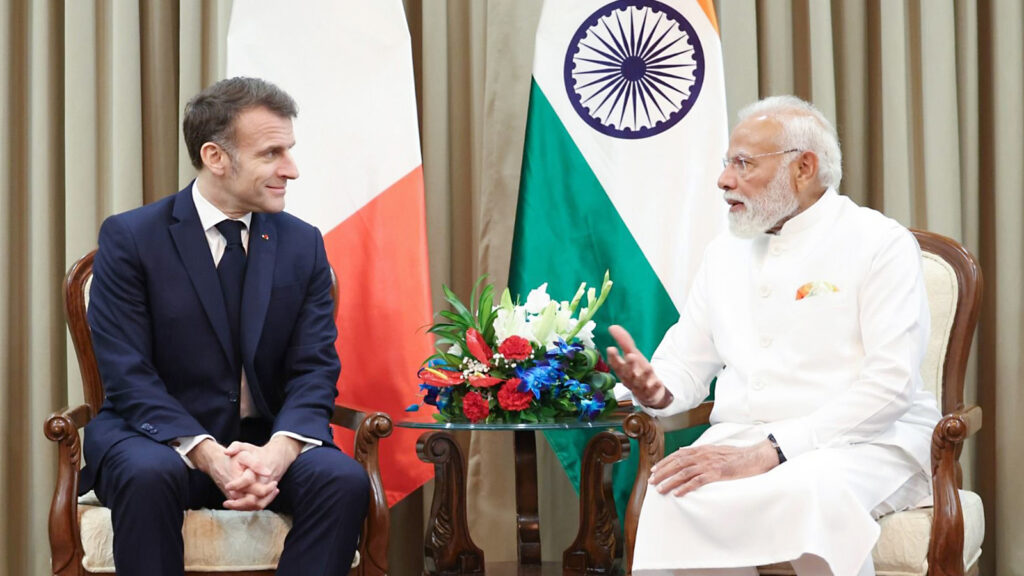
The diplomatic breakthrough in Nice builds directly upon the “Special Global Strategic Partnership” established by both leaders. By aligning India’s Viksit Bharat 2047 developmental vision with the France 2030 industrial model, this newly minted roadmap positions scientific co-development as the core driver of mutual economic resilience and technological sovereignty.
The expanded alliance aggressively shifts focus toward digital public infrastructure instead of relying strictly on traditional defence and civil nuclear frameworks. Consequently, the Ministry of External Affairs (MEA) announced that joint regulatory bodies will govern the overarching vision. In doing so, they ensure that emerging consumer tech complies fully with human-centric and democratic values. Furthermore, this framework establishes clear guidelines for future technology sharing.
Trusted AI Forms the Core Pillar
A central cornerstone of the 2030 roadmap is the development of a secure, transparent “Trusted AI” architecture. While rapid algorithmic models pose global safety data challenges, India and France are establishing a Joint India-France AI Working Group to coordinate international tech governance explicitly.
The technological alliance targets key priority areas:
- Online Child Safety: Developing privacy-preserving age-verification systems and outcome-based safety standards.
- Data Interoperability: Linking India’s Data Empowerment and Protection Architecture (DEPA) with French trusted health platforms to accelerate safe medical research.
- Academic AI Chairs: Establishing a specialized Indian Council for Cultural Relations (ICCR) India Chair on “AI, Innovation and Culture” at Université Paris-Saclay.
Pacts Unveiled Across Space, Aviation, and Startups
To immediately catalyse the roadmap, institutional entities from both nations signed 19 definitive agreements spanning prestigious academic networks, including multiple Indian Institutes of Technology (IITs) and the Indian Institute of Science (IISc). Furthermore, the economic corridor expands digital payment access by widening the integration of India’s real-time Unified Payments Interface (UPI). Consequently, this rollout will seamlessly cover commercial points across France.
| Sector Focus | Core Initiative / Agreement | Primary Objective |
|---|---|---|
| Aeronautics | Franco-Indian Campus at NSTI Kanpur | Advanced skill training for aviation careers. |
| Startups | Station F Expansion Corridor | Incubating an additional 10 Indian deep-tech startups in Paris. |
| Space Tech | ISRO & CNES Letter of Intent | Advancing microgravity research and human spaceflight. |
| Railways | Declaration of Intent on High-Speed Rail | Collaborative manufacturing of modern transit infrastructure. |
Boosting Academic Mobility and Strategic Energy Ties
On the sidelines of the tech announcements, Prime Minister Modi formally thanked President Macron for the swift implementation of visa-free airport transit facilities for Indian travellers passing through French territories. In this manner, France re-emphasised its commitment to host 30,000 Indian higher-education students by 2030. To make transition processes seamless, both countries are actively expanding the Mutual Recognition of Qualifications framework.
Transitioning to critical energy defense, Foreign Secretary Vikram Misri confirmed that discussions between French power giant EDF and the Nuclear Power Corporation of India Limited (NPCIL) are progressing steadily for the Jaitapur nuclear plant. Consequently, the official framework effectively opens the door for French private sector participation in India’s conventional small modular reactors (SMRs).
Conclusion
The adoption of the India-France Innovation Roadmap 2030 marks a shift from a buyer-seller dynamic to a co-developing technological partnership. By linking critical public digital infrastructure like UPI with world-class French engineering centres, both nations are ensuring long-term technological sovereignty. Admittedly, the execution of complex nuclear and trade targets will require consistent regulatory alignment. Nevertheless, this comprehensive blueprint successfully establishes a resilient, independent technology ecosystem. Consequently, the framework is highly capable of weathering global supply chain vulnerabilities.