
Quantum Leap: Microsoft Targets 2029 for Commercial Quantum Supercomputer via AI-Designed ‘Majorana 2’ Chip
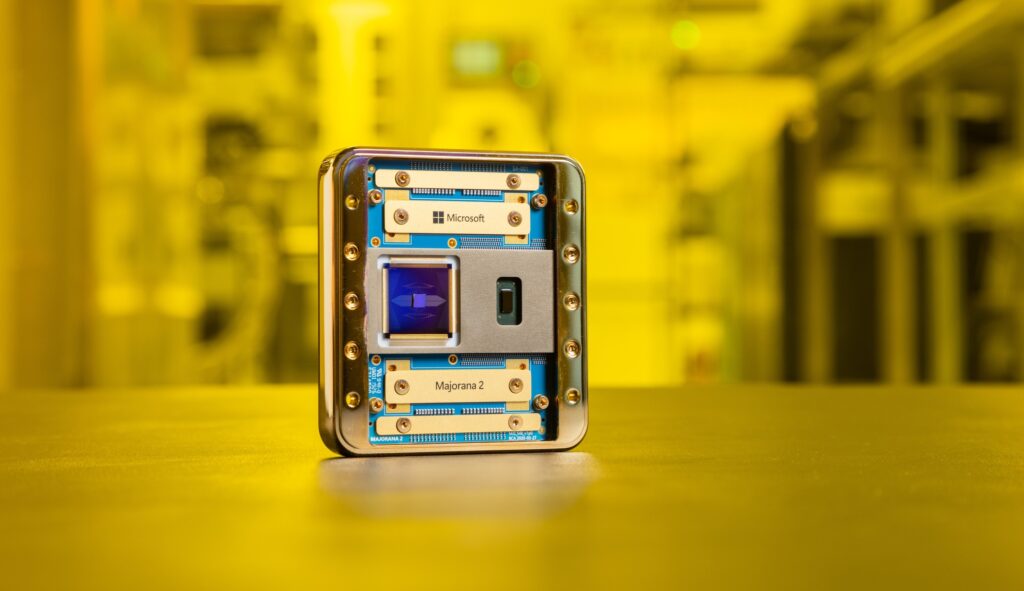
In a move that has drastically accelerated the global tech race, Microsoft announced that it expects to build a commercially viable, scalable quantum supercomputer by 2029. Making the announcement at its Build Developer Conference in San Francisco, the tech giant revealed that it has successfully halved its original development timeline. This rapid acceleration is primarily credited to the integration of Microsoft’s own scientific artificial intelligence platform, which solved complex physics roadblocks in a fraction of the expected time.
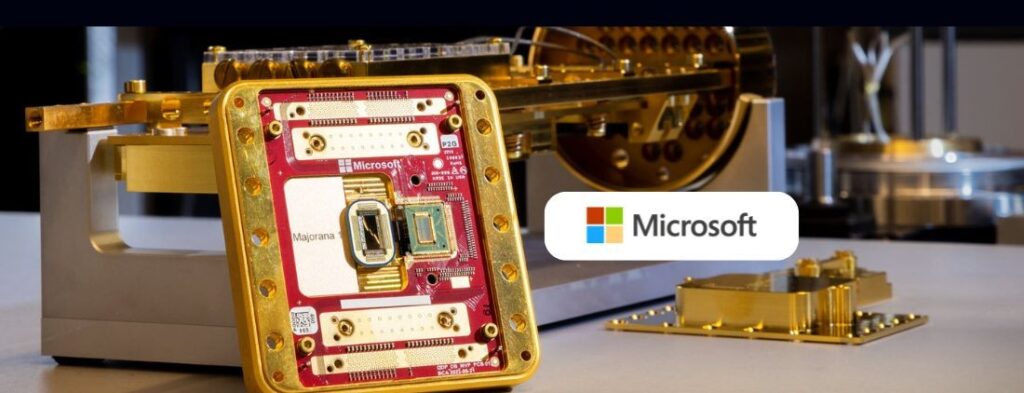
The AI Breakthrough: Introducing Majorana 2
The centerpiece of Microsoft’s updated quantum roadmap is its next-generation quantum processor, Majorana 2. Unlike traditional engineering methods that require decades of trial and error, Microsoft utilized its specialized AI platform, “Discovery,” to co-design the chip.
By deploying advanced AI agents, researchers bypassed severe hardware manufacturing bottlenecks. The AI successfully simulated material interactions at an atomic level, allowing Microsoft to swap out traditional aluminium components for a highly stable combination of lead superconductors and Indium Arsenide Antimonide semiconductors.
Solving the ‘Noise’ Problem with Topological Qubits
The greatest hurdle in quantum computing has always been “decoherence”—a phenomenon where qubits (the basic units of quantum information) lose their quantum state due to minor environmental interferences like heat or cosmic rays, causing severe mathematical errors.
Microsoft’s solution relies on an architecture called Topological Qubits. The new hardware composition of the Majorana 2 chip locks qubits into a stable topological phase. According to Microsoft’s hardware verification teams, these hardware-protected qubits are 1,000 times more stable and reliable than the company’s first-generation prototypes, effectively neutralising the threat of external environmental noise.
Azure Integration and the Next Cyber Race
Microsoft is not designing these quantum machines to sit isolated in physics laboratories. The company’s 2029 target involves integrating these hybrid quantum-classical systems directly into its existing Azure Cloud data centre infrastructure. This capability will allow enterprise clients to run highly complex calculations. Specifically, they can optimize data in pharmacology, materials science, and clean energy. Currently, these tasks are impossible for modern supercomputers.
However, commercially available quantum computers will possess raw power. Consequently, they can easily shatter modern digital encryption systems. For example, this includes RSA algorithms and banking firewalls. Therefore, Microsoft is simultaneously rolling out a protective ecosystem. Starting in 2029, the company will deploy default Post-Quantum Cryptography (PQC) algorithms. Initially, these will protect Windows, Azure, and Microsoft 365 services. Ultimately, Microsoft aims for a fully quantum-immune global network by 2033.
Conclusion
Microsoft’s aggressive 2029 timeline places it in a direct bottleneck with rivals like IBM and Google. Currently, both competitors are spending billions to achieve quantum supremacy by the end of the decade. Meanwhile, independent physicists note that Microsoft’s latest material data is still undergoing rigorous evaluation. Specifically, bodies like DARPA are reviewing these findings. Nevertheless, the integration of generative AI into quantum hardware design has fundamentally changed the playing field. Furthermore, if Microsoft hits its 2029 target, it will not just be launching a new computer. Instead, it will be unlocking an entirely new era of human scientific discovery. Consequently, this breakthrough will reshape global technology research for decades to come.