
Trade War Tensions: Trump Threatens More Tariffs on Indian Rice, Accusing New Delhi of ‘Dumping’
US President Signals Escalation of Trade Friction Amid Farmer Complaints; India’s Basmati Exports Expected to Withstand New Duties
Trump Threatens Tariffs Over Alleged Rice ‘Dumping’
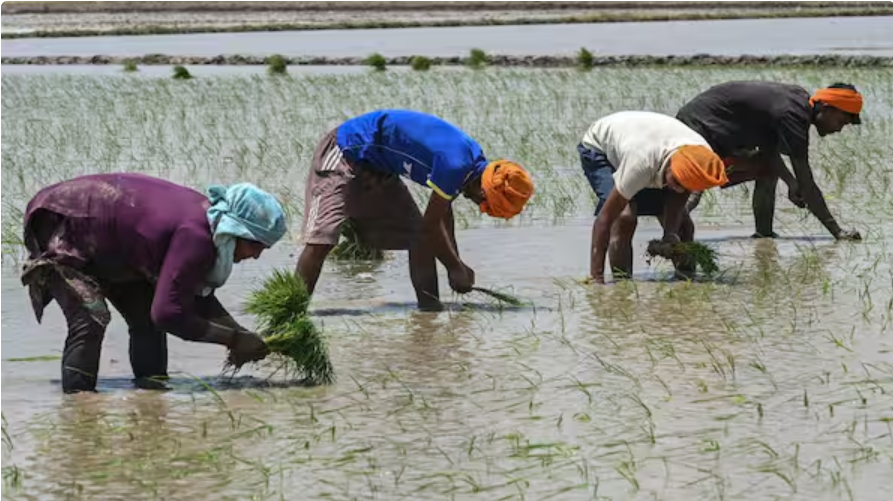
US President Donald Trump has raised the specter of a major new trade barrier, explicitly warning that his administration may impose additional tariffs on Indian rice exports. Speaking at a White House roundtable with American farming sector representatives on Monday, the President accused India of “dumping” the commodity into the U.S. market, thereby harming domestic producers.
“They shouldn’t be dumping,” Trump stated, adding that he had received complaints about cheap imports undercutting American farmers. When questioned by Treasury Secretary Scott Bessent on whether India had any trade exemption on rice, Trump reiterated: “They cannot do that.” The threat underscores the administration’s continued focus on using tariffs as a primary tool to address perceived trade imbalances and protect politically vital domestic industries. The warning comes as the U.S. has already imposed a 50% tariff on a wide array of Indian goods, one of the highest rates currently applied by Washington against any trading partner.
Political Messaging vs. Economic Reality
Analysts and Indian trade experts argue that the threat is largely driven by domestic politics rather than sound economic or trade logic. India’s total rice exports to the U.S. are commercially small—around $392 million in FY2025, constituting less than 3% of India’s global rice trade. Critically, over 85% of this consists of premium Basmati rice, which is largely demand-driven by Gulf and subcontinent communities in the U.S. and is not directly replaceable by U.S.-grown varieties.
Indian Rice Exporters Federation (IREF) representatives noted that even the existing 50% tariff has not significantly dented demand, proving the resiliency of the sector. However, the new tariffs, if implemented, would likely be passed on to American consumers, making high-quality Indian rice more expensive for U.S. households. Indian markets, particularly shares of major rice exporters like LT Foods and KRBL, saw temporary selling pressure following the news, reflecting investor anxiety over trade uncertainty.
Impact on Stalled India-US Trade Talks
Trump’s warning is timed sensitively, coinciding with an ongoing visit by a high-level U.S. delegation to New Delhi aimed at easing the existing trade friction and achieving a breakthrough in stalled trade negotiations. India has long sought a broader, stable trade arrangement, but the President’s persistent threat of more tariffs—which also included hints at imposing duties on Canadian fertilizers—signals that the administration remains committed to a protectionist stance.
For India, the tariffs are viewed as an unfair and unjustified pressure tactic, potentially linked not just to trade barriers, but also to New Delhi’s recent decision to increase its purchase of Russian oil. Regardless of the actual economic impact on India’s vast rice export industry, the move highlights the persistent challenge for New Delhi in navigating the complex and often confrontational trade policies emanating from Washington.