
Kerala Teen Develops Kidney Disease After Using Mercury-Laced Fairness Cream
Kerala, November 21, 2026
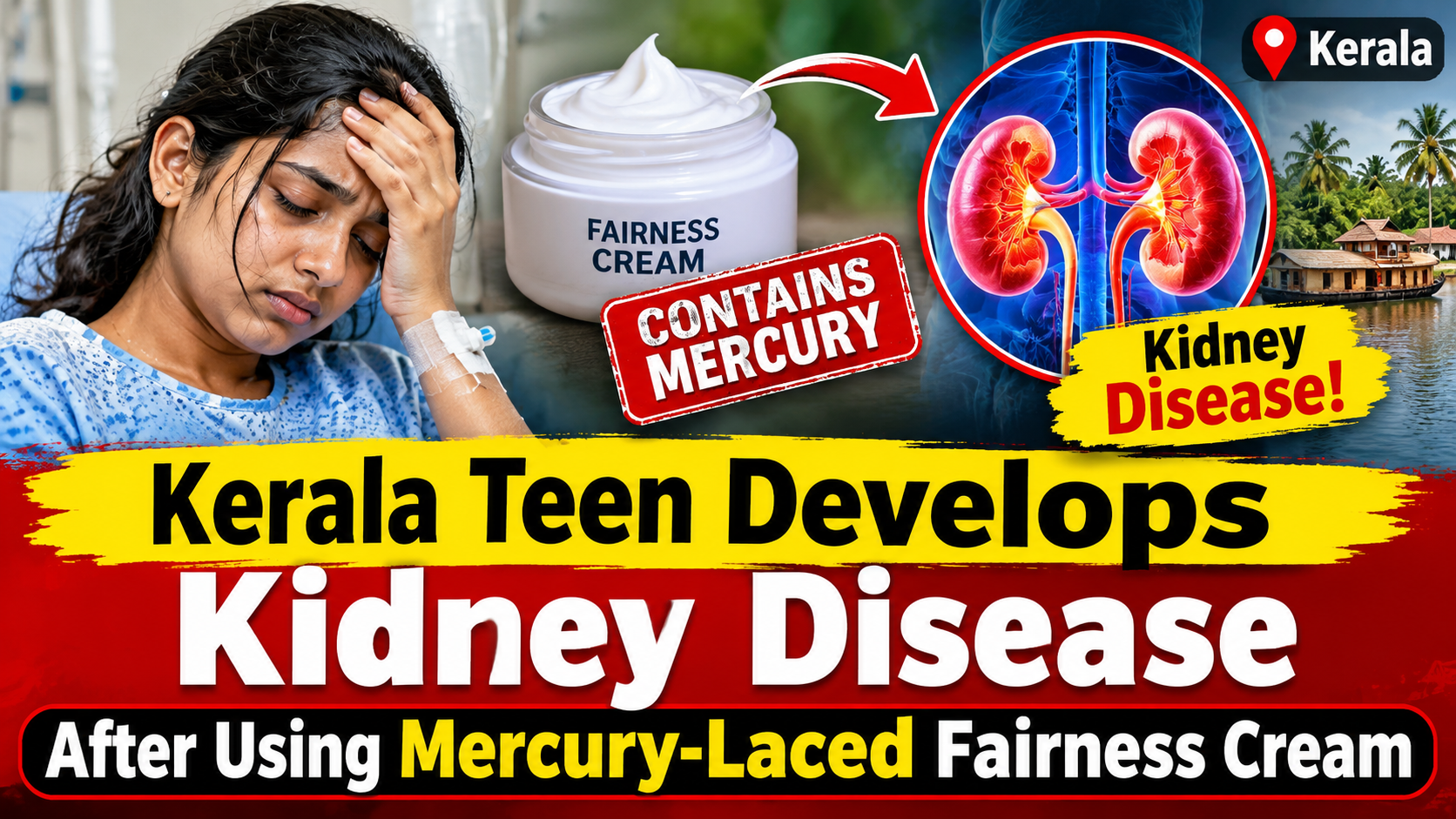
A 17-year-old girl from Kerala has reportedly developed a serious kidney disorder after using a social media-promoted fairness cream containing dangerously high levels of mercury. The case has raised concerns about the safety of cosmetic products sold online and the growing influence of beauty advertisements promoted by social media influencers.
According to reports, the teenager purchased the fairness cream after watching promotional videos on Instagram. The product was advertised as a solution for common skin concerns, including pimples, dark spots and pigmentation. However, laboratory testing reportedly detected approximately 12,500 parts per million (ppm) of mercury in the cream, raising serious questions about its safety.
Doctors at Aster MIMS Mother Hospital in Malappuram said the girl was diagnosed with membranous nephropathy, a kidney disorder that affects the tiny filtering structures responsible for removing waste and excess fluids from the blood.
The incident highlights the potential health risks associated with unverified skincare products and the importance of checking cosmetic ingredients before use.
How the Kerala Girl Purchased the Fairness Cream
According to the reports, the teenager discovered the product through promotional videos shared by Instagram influencers. The advertisements reportedly claimed that the cream could improve skin appearance by reducing pimples, pigmentation and dark spots.
Interested in the product, she contacted the sellers through a WhatsApp number shared on Instagram and placed an online order.
Initially, she believed the cream was producing positive results. Encouraged by the perceived improvement, she continued using it and reportedly ordered several additional bottles over approximately one year.
The product’s promotional claims influenced her decision to continue using it. However, she later began experiencing serious health complications.
Kidney Disease Symptoms Appeared After Regular Use
After prolonged use of the cream, the girl reportedly experienced a sudden drop in blood pressure, episodes of fainting and swelling in her legs.
The swelling gradually became severe, making it difficult for her to walk and climb stairs. Concerned about her worsening condition, her family took her for medical treatment at Aster MIMS Mother Hospital in Malappuram.
Following detailed medical investigations, doctors detected dangerously elevated mercury levels in her body.
Nephrologist Gowri S, who is treating the teenager, reportedly explained that mercury can severely damage the kidneys’ filtering units. The girl was diagnosed with membranous nephropathy, a serious condition that can affect normal kidney function and lead to further complications if not properly treated.
Laboratory Tests Reveal 12,500 PPM Mercury in Face Cream
One of the most concerning findings in this case was the amount of mercury detected in the skincare product.
According to the treating doctor, laboratory testing revealed approximately 12,500 ppm of mercury in the cream. This is equivalent to 1.25 per cent mercury by concentration.
Under India’s Cosmetics Rules, 2020, unintentional mercury in finished cosmetic products other than those intended exclusively for the eye area must not exceed 1 ppm. The separate allowance for certain mercury preservatives in eye-area cosmetics does not apply to ordinary fairness creams.
The reported concentration of 12,500 ppm is therefore approximately 12,500 times the 1 ppm limit for unintentional mercury in other finished cosmetic products.
Mercury is a toxic heavy metal that can enter the body through repeated skin exposure. Prolonged exposure to mercury-containing skin-lightening products can cause serious health problems, particularly affecting the kidneys and nervous system.
Why Mercury Is Used in Some Skin-Lightening Products
Mercury compounds have been used illegally in some skin-lightening products because they interfere with melanin production.
Melanin is the natural pigment responsible for skin colour. Certain mercury compounds can reduce its production, creating a temporary skin-lightening effect.
Although these products may be marketed as solutions for pigmentation, dark spots and uneven skin tone, mercury exposure can pose significant health risks.
The World Health Organization (WHO) identifies mercury-containing skin-lightening products as a public health concern. According to the organisation, mercury exposure can damage the kidneys and nervous system and cause skin-related problems.
The WHO has also highlighted the need to eliminate mercury-containing skin-lightening products and strengthen awareness about their harmful effects.
Social Media Beauty Advertisements Raise Consumer Safety Concerns
The Kerala case has renewed concerns about beauty products promoted through Instagram and other social media platforms.
Influencer marketing has become an important part of the beauty industry. Promotional videos, product reviews, discount offers and before-and-after photographs can influence consumers, particularly young people looking for quick solutions to skincare problems.
However, a product’s popularity on social media does not guarantee its safety, quality or regulatory compliance.
Consumers may purchase products without knowing their complete ingredient lists, manufacturing details or safety standards. Products sold through unofficial online channels can create additional difficulties when buyers need to verify the seller or report adverse reactions.
The incident also raises questions about the responsibility of sellers, manufacturers and influencers when promoting cosmetic products that make claims about skin improvement.
Responsible advertising should provide accurate product information and avoid misleading promises about instant fairness or guaranteed results.
Family Alleges Company Failed to Respond Properly
According to reports, the teenager informed the company about the health problems she experienced after using the product.
She alleged that the company initially assured her that the complaint would be forwarded to senior officials. However, she later stopped receiving responses to her messages.
The girl’s family has reportedly decided to initiate legal proceedings against the company through the consumer court.
The family has not disclosed the name of the fairness cream while preparing to pursue the legal matter.
The allegations and the company’s response should be independently verified as the matter progresses.
What Consumers Should Know Before Buying Fairness Creams
The incident serves as an important reminder that skincare products should be selected carefully. Consumers should not rely entirely on advertisements, influencer recommendations or claims promising immediate results.
Here are some important precautions:
- Check product ingredients: Read the complete ingredient list before purchasing or applying any cosmetic product.
- Verify the manufacturer: Check the manufacturer’s name, address and product details.
- Avoid unrealistic claims: Be cautious of products promising instant fairness, rapid whitening or dramatic results within a few days.
- Buy from reliable sellers: Prefer authorised retailers and verified brands instead of unknown online sellers.
- Consult a dermatologist: Seek professional advice for acne, pigmentation, dark spots and other skin concerns.
- Stop using suspicious products: If a product causes an unusual reaction, discontinue its use and consult a healthcare professional.
People who suspect mercury exposure should seek medical advice rather than attempting self-treatment.
Kerala Fairness Cream Case Highlights Need for Stronger Cosmetic Safety Checks
The reported kidney disease case involving the Kerala teenager highlights the importance of stronger monitoring of cosmetic products sold through online platforms.
Regulatory authorities, manufacturers and online marketplaces all have an important role in ensuring that skincare products meet applicable safety requirements.
Greater transparency about product ingredients, stricter quality checks and responsible influencer marketing can help protect consumers from potentially dangerous cosmetics.
The incident is also a reminder that skincare should focus on healthy skin rather than unrealistic beauty standards.
Beauty should never come at the cost of health. Consumers must prioritise safety, verify product information and seek professional guidance before using unfamiliar skincare products.
#KeralaNews #KidneyDisease #MercuryPoisoning #FairnessCream #FaceCream #SkincareSafety #BeautyProducts #HealthNews #IndiaNews #ConsumerAwareness #HarmfulChemicals #CosmeticSafety #SocialMediaPromotion #HealthAwareness #KeralaGirl