
Half a Decade Later: Why Dil Bechara Still Moves Us to Tears
By Amit Kumar
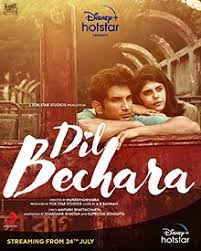
Today, as we mark a day after the fifth anniversary of Dil Bechara’s release, its emotional
resonance feels as strong as ever. A film that remains etched in the collective heart of its audience,
not just as a story, but as an unforgettable farewell. What makes Dil Bechara so profoundly moving
isn’t just its tale of love between two young souls battling cancer, but the real-life tragedy that
shadows it,Sushant Singh Rajput’s final performance, immortalized forever on screen.
Dil Bechara opens with a deceptively simple yet extraordinary sequence, a single-take musical
number introducing Manny (Rajput) dancing through a crowd. The camera never cuts; it follows
him closely, effortlessly pulling you into his world. It’s a classic Hindi cinema trope, but here it’s
transformed into something magical, a vibrant hello that, heartbreakingly, is also a goodbye.
Because as the credits rolled, fans realized they were watching their beloved actor’s last bow.
Adapted from John Green’s The Fault In Our Stars, the film tells the story of Manny and Kizie
(Sanjana Sanghi), two young people grappling with the shadow of terminal illness. Unlike the
original novel and Hollywood adaptation, here Manny’s illness remains more subdued at first, his
lost leg is mentioned casually, while Kizie carries the visible burden, with her oxygen cylinder
Pushpinder always by her side. This contrast deepens the narrative, making their interactions both
tender and bittersweet.
The film balances the weight of its premise with moments of lightness, Manny’s charm, his
persistent pursuit of Kizie, the low-budget film project he drags her into, and the quest to find a
mysterious composer whose unfinished song becomes a metaphor for their own interrupted lives.
A.R. Rahman’s music wraps the story in warmth, making even its saddest moments resonate with
a haunting beauty.
Yet, Dil Bechara is not without its flaws. Some dialogues feel overwrought, and a trip to Paris feels
more like a montage than a lived experience. But the undeniable strength lies in the chemistry
between Rajput and Sanghi, two very different actors who create an oddly believable, deeply
human love story.
What truly sets Dil Bechara apart is the timing and the context of its release. Coming less than two
months after Rajput’s tragic death, the film was not just a story on screen, it became a vessel of
collective mourning. Manny listening to his own eulogies, knowing his time is short, was no longer
just fiction. It was a mirror reflecting the real heartbreak of losing a young, brilliant life far too soon.
Watching Dil Bechara today, five years on, is like holding a fragile relic of love, loss, and hope. It
reminds us that while life can be brutally unfair, it also has moments of profound beauty. The film’s
tear-jerking scenes and heartfelt music still stir emotions, not because of cinematic perfection, but
because of the raw humanity they capture.
Dil Bechara taught us that goodbyes can be imperfect, but they can still be filled with grace. It
showed us that even unfinished songs and unfinished stories have meaning, that pain and joy
often coexist, and that true love, leaves an indelible mark.
Five years later, Dil Bechara remains a tender goodbye, a cinematic embrace that continues to heal
and haunt. And in remembering it, we remember Sushant Singh Rajput, not just as a hero on
screen, but as a young man whose light, though extinguished, still warms millions of hearts.