
Bihar Political Shift: Nitish Kumar Resigns; BJP to Lead
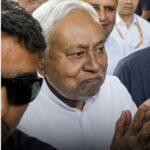
The Bihar political shift reached a climax today as Nitish Kumar, the state’s longest-serving Chief Minister, organised his final cabinet meeting. During the session, he suggested removing his council of ministers. Following his recent election to the Rajya Sabha, the JD(U) leader is moving into national politics. This transition ends a power period that lasted almost two decades.
Constitutional Steps at the State Secretariat
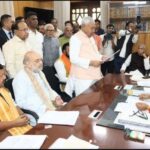
Nitish Kumar informed his colleagues of the cabinet’s dissolution during a series of rapid events at the state secretariat. He will submit his official resignation to Governor Syed Ata Hasnain later this afternoon. This step follows our previous report on Bihar’s changing alliances.
Meanwhile, the Bharatiya Janata Party (BJP) is ready to name Bihar’s first Chief Minister. With 89 MLAs, the BJP is currently the largest party in the assembly. Union Minister Shivraj Singh Chouhan has travelled to Patna as the central observer. He will supervise the election of the new leader during the NDA meetings at 3:00 PM today.
Who Will Become the Next Chief Minister?
The BJP’s national leadership must now select a replacement who can manage Bihar’s complex caste dynamics. Samrat Choudhary, the current Deputy Chief Minister and state BJP President, remains the front-runner. His rise shows the party’s plan to unite the essential OBC and EBC vote banks.
However, Nityanand Rai is also a strong candidate. He has close ties to the central leadership and a significant organisational background. The party might also choose a “surprise” candidate. This has become a trademark of recent BJP selections in other states. They seek a face that reflects the “New Bihar” agenda while preserving the NDA’s peace.
A New Road Map: The Transition to “Industrial Bihar”
This transfer of power signifies a fundamental change in Bihar’s governance. While Nitish Kumar focused on “social engineering,” the BJP-led administration will likely focus on aggressive industrialisation.
Insiders suggest a significant review of the Prohibition Policy may happen soon. This would release state funds for large-scale initiatives like the Bihar Semiconductor Mission. The “Double-Engine” narrative will now take centre stage. The state administration and New Delhi will collaborate closely to expedite long-pending projects and draw in private investment.
Conclusion: A New Chapter Begins
With Nitish Kumar’s departure, the “coalition-era” politics that characterised Bihar for a generation come to an end as Patna gets ready for a historic swearing-in ceremony on April 15. Kumar has essentially given the reins to a state that is eager for economic change by resigning in favour of a BJP leader. This is a “test by fire” for the BJP, a chance to demonstrate that it can lead Bihar on its own and fulfil its promise of Viksit Bihar. The people of Bihar look forward to a future that promises to swap political survivalism for industrial success as the Nitish administration comes to an end.
It’s certainly a big shift for Bihar and will be interesting to see how the BJP governs there now.