
Fake News on Social Media: How to Identify Misinformation Before You Share It?
BY LINE: SAGUFTA RANI
Social media has become one of the fastest ways to get news and information. Every day, millions of people use platforms like Facebook, Instagram, YouTube, and WhatsApp to learn about what is happening around them.
But not everything we see online is true.
Fake news and misinformation can spread within minutes. A misleading post, edited video, fake screenshot, or old news story can be shared thousands of times before anyone checks whether it is genuine. Sometimes, people share false information without intending to harm anyone simply because they believe it is real.
This is why learning how to identify fake news is important for everyone.
What Is Fake News and Misinformation?
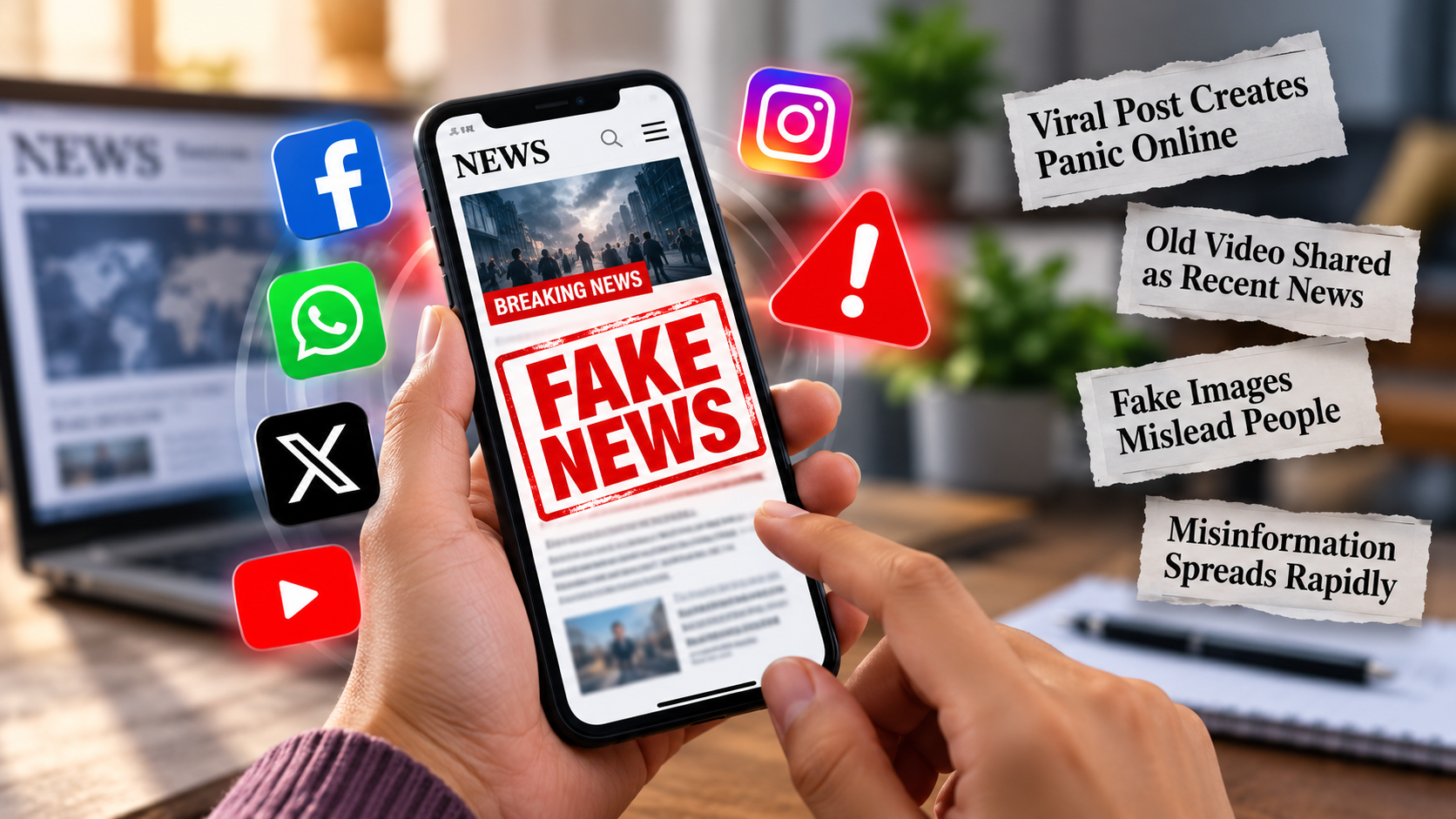
Fake news refers to false or misleading information presented as if it were real news. Misinformation is false information that is shared without necessarily intending to deceive people.
For example, someone may receive a WhatsApp message claiming that a particular product, person, or government service has changed. If the person believes the message and forwards it without checking, the information can reach hundreds of others.
Not every false post is created with bad intentions. However, once incorrect information starts spreading, it can create confusion, fear, and even financial or social harm.
Why Does Fake News Spread So Quickly?
There are several reasons why misinformation spreads rapidly on social media.
1. People Share Before Checking : Many users immediately share information that looks important or shocking. They may not take the time to check where the information came from.
2. Emotional Content Gets Attention: Posts that make people angry, scared, surprised, or excited often receive more attention. Fake news creators can use strong emotions to encourage people to click and share.
3. Fake Headlines Can Look Real : A fake website or social media account can use a professional-looking logo, headline, and image to appear trustworthy.
4. Social Media Makes Information Travel Quickly : One person can share a post with hundreds of followers, who can then share it with their followers. As a result, false information can reach a large audience very quickly.
Common Signs That a News Story May Be Fake
You don’t need to be a technology expert to identify suspicious information. Look for these warning signs.
Shocking or Sensational Headlines
Be careful when a headline says things like “You Won’t Believe This!” or makes an extreme claim without providing evidence. A headline designed mainly to make you angry or afraid deserves extra attention before you share it.
No Reliable Source
Check who published the information. If a post does not mention where the information came from, or only says “sources say” without providing evidence, be careful.
Old News Presened as New
Sometimes genuine news is shared years after it originally happened. Always check the publication date. An old photograph or news report can be misleading when presented as a recent event.
Edited Images and Videos
Images and videos can be edited easily. AI-generated content and deepfake technology have also made it more difficult to know whether something is genuine. A video that looks real does not automatically mean that the event actually happened.
Poor Grammar and Strange Formatting
Fake websites and posts sometimes contain unusual spelling, grammar mistakes, strange website addresses, or excessive punctuation. These signs alone do not prove that something is fake, but they can be reasons to investigate further.
How AI and Deepfakes Are Making Fake News More Dangerous?
Artificial intelligence has made it easier to create realistic images, videos, and voices. A deepfake can make it appear as though a person said or did something that never actually happened. AI-generated images can also look realistic enough to confuse viewers.
This makes digital awareness more important than ever. When you see an unusual video, image, or audio clip, don’t immediately assume it is genuine. Look for the original source and check whether reliable news organizations or official sources have reported the same event.
What Should You Do When You Receive Suspicious Information?
Before sharing a suspicious post, remember four simple steps:
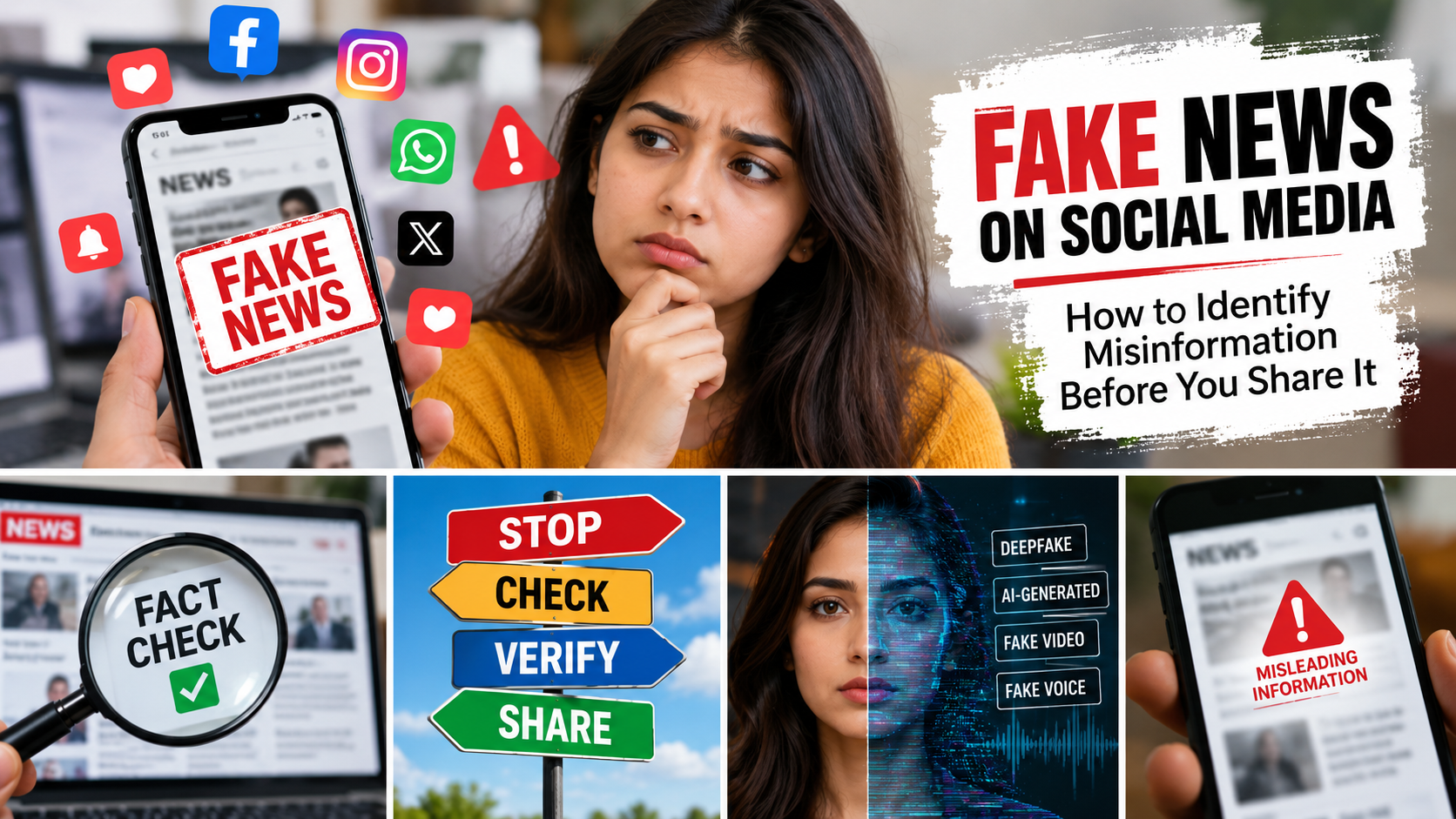
STOP → CHECK → VERIFY → SHARE
STOP: Don’t immediately forward the message.
CHECK: Look at the source, date, images, and claims.
VERIFY: Compare the information with reliable and official sources.
SHARE: Share it only when you are confident that the information is accurate.
If you cannot verify a claim, it is better not to share it.
Think Before You Click the Share Button
Social media gives everyone the power to spread information. That power also comes with responsibility. You don’t have to be a professional journalist or fact-checker to help stop misinformation. Even a few seconds of checking can prevent a false message from reaching hundreds of people.
The next time you receive a shocking message, an unusual video, or a breaking-news post, don’t ask only: “Is this interesting?”
Ask: “Is this true?”
In the digital age, responsible sharing is one of the simplest ways we can make social media safer and more trustworthy.
Think before you click. Check before you share.