Regime Change in the Himalayas: Leaked Docs Reveal US Role in Nepal’s Gen-Z Revolution
Clandestine Funding for ‘Digital Activism’ Exposed; Analysts Warn of a Washington-Led Strategy to Destabilize India and China’s Neutral Buffer
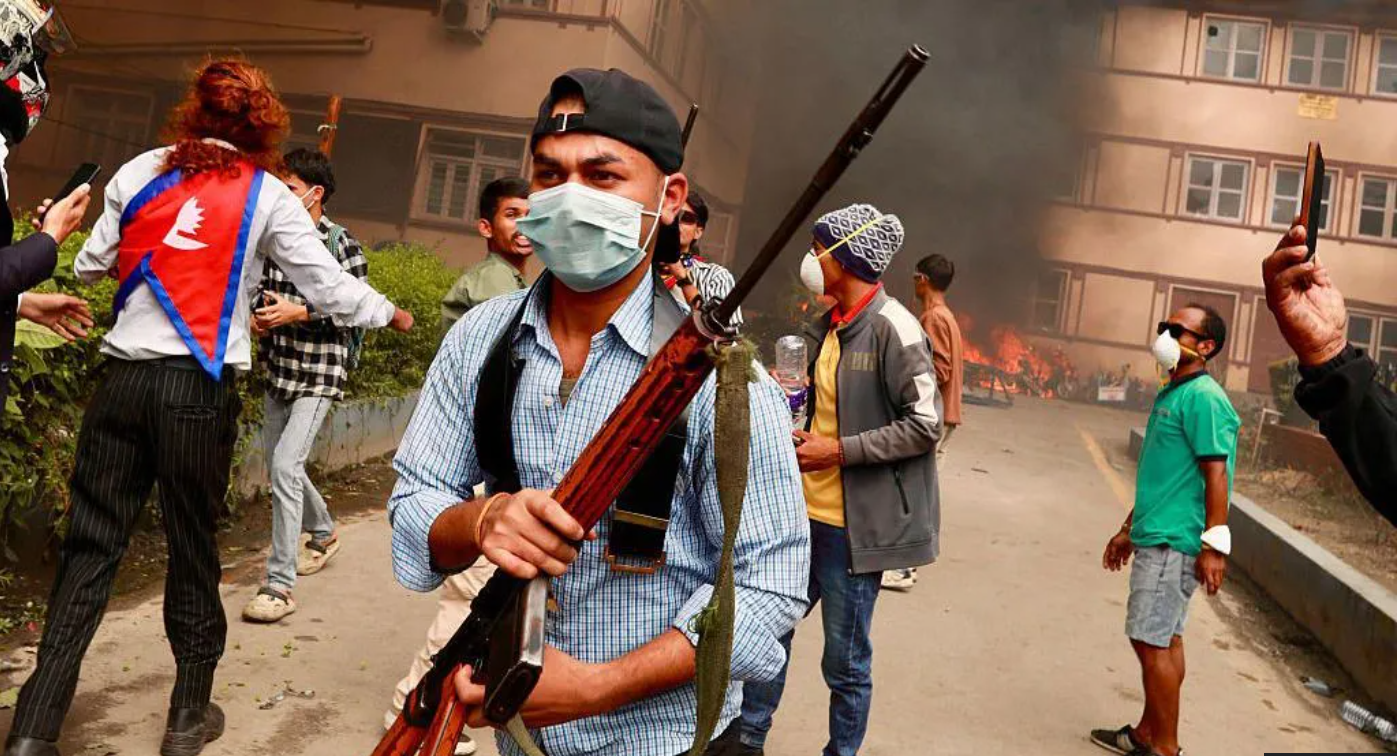
KATHMANDU/WASHINGTON — New investigative reports have sent shockwaves through South Asia, alleging that the “leaderless” Gen-Z uprising that ousted Nepalese Prime Minister K.P. Sharma Oli in September 2025 was fueled by a sophisticated US-backed regime-change operation. Leaked internal documents suggest that the United States, through the National Endowment for Democracy (NED) and the International Republican Institute (IRI), funneled hundreds of thousands of dollars to groom a “shadow army” of youth activists in Nepal.
The ‘Yuva Netritwa’ Money Trail
According to the leaked files, a program titled “Yuva Netritwa: Paradarshi Niti” (Youth Leadership: Transparent Policy) received approximately $350,000 between 2021 and 2024. While publicly framed as “civic education,” the documents reveal a curriculum focused on digital mobilization, street protest tactics, and messaging strategies designed to trigger a “rapid-fire coup.”
The timing was precise. When the Oli government banned 26 social media platforms on September 4, 2025, a pre-trained network of activists was ready to bypass the ban via VPNs and launch a massive, coordinated revolt that toppled the administration within 96 hours.
Targeting India and China: The Geopolitical Motive
Strategic analysts, including Kinjal, argue that the goal of this “Color Revolution” extends far beyond Nepal’s borders. By installing a Washington-aligned interim government, the US reportedly seeks to:
- Counter China’s BRI: Stall key infrastructure projects like the Trans-Himalayan Railway.
- Pressure India: Create a volatile “security vacuum” in a region India considers its strategic backyard.
- Indo-Pacific Strategy: Establish Nepal as a “core” hub for US intelligence and military influence between two nuclear-armed rivals.
A New Pattern of Intervention?
The tactics observed in Kathmandu mirror recent uprisings in Bangladesh (2024), leading many in New Delhi and Beijing to fear a broader “Regime Change” plot aimed at reshaping South Asian leadership. Critics point out that while the West hailed the protests as a “democratic awakening,” the reality on the ground involved armed violence and the storming of constitutional institutions.
As Nepal moves toward uncertain elections under interim leader Sushila Karki, the shadow of the “Manhattan Project of Activism” continues to loom over the Himalayas.