US Proposes ‘Core 5’ Superclub of Nations Including India, Russia, and China
Leaked Draft of US National Security Strategy Suggests Replacing G7 with C5—A New Elite Group Focused on Hard Power, Excluding Europe
Trump Administration Floats ‘Core 5’ Concept in Strategy Draft
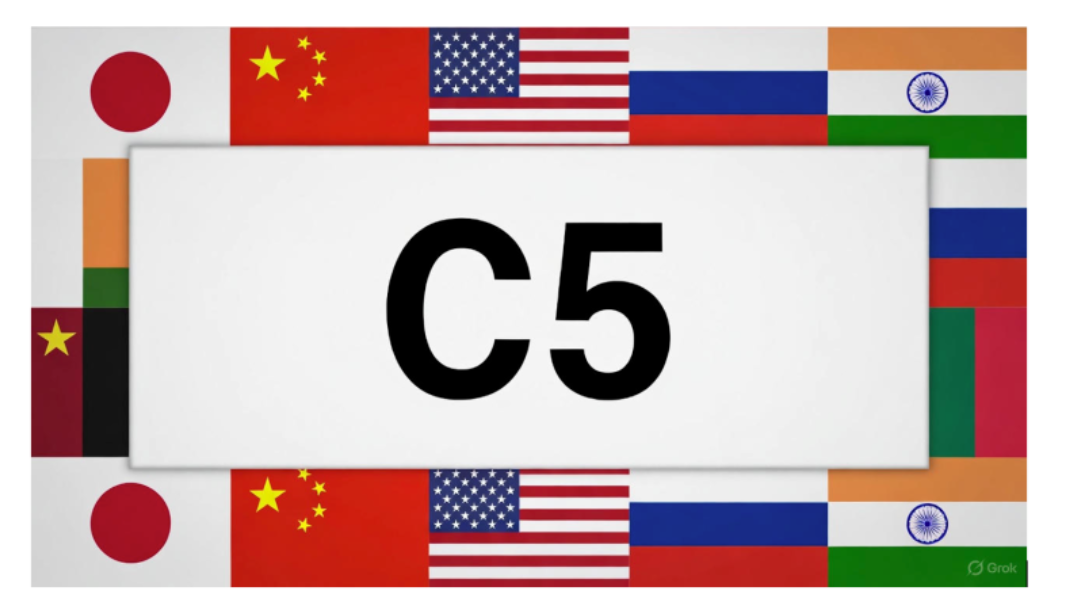
A bombshell report originating from an unpublished, extensive draft of the U.S. National Security Strategy (NSS) under the Donald Trump administration reveals a radical proposal to restructure the global power architecture. The strategy calls for the formation of a new elite grouping, referred to as the ‘Core Five’ (C5), comprising the world’s most powerful and populous nations: The United States, China, Russia, India, and Japan.
This concept, circulated among top national security advisors, aims to create a streamlined, hard-power-focused forum that would meet regularly to address pressing geopolitical crises, starting with the immediate stabilization of the Middle East, including the normalization of ties between Israel and Saudi Arabia. The proposal suggests the C5 would effectively sideline the existing economic and democratic-based groupings like the G7 and shift global governance toward an axis determined by sheer military and economic might.
India’s Elevation and Europe’s Exclusion
The inclusion of India in the proposed C5 is a clear acknowledgment of its surging global influence and demographic weight, elevating New Delhi into the very highest tier of global power brokers, alongside traditional rivals. For India, a C5 membership would legitimize its role as a key decision-maker on global security issues far beyond its immediate neighborhood.
Conversely, the draft strategy is highly critical of the European Union, which it alleges is facing a “civilizational crisis” due to policy on immigration and freedom of expression. The exclusion of major European powers like France, Germany, and the United Kingdom from the proposed C5 is the most controversial aspect of the plan. Analysts view this as a clear signal of the Trump administration’s distrust of transatlantic alliances and a preference for transactional dealings with regional strongmen, including geopolitical rivals.
A Defining Moment for Global Power Politics
The proposed C5 structure aligns perfectly with President Trump’s unconventional foreign policy doctrine: one based on negotiating directly with major powers, regardless of their ideological alignment, to pursue immediate American interests. This mechanism would allow Washington to engage directly with both Beijing and Moscow on issues of strategic stability while simultaneously co-opting India as a key balancing power in Asia.
While the concept remains an internal proposal, its leak signals a monumental shift in strategic thinking within Washington. Should the C5 proposal materialize, it would represent a historic break from the post-World War II global order, cementing a new, hard-edged era of great power competition where military strength and economic size dictate the rules, rather than democratic values or multilateral consensus. The world is watching to see if this revolutionary concept moves from draft to diplomatic reality.