
🇲🇽 Mexico Slaps Tariffs Up to 50% on Indian Imports
Auto and Steel Exports Worth Over $1 Billion at Risk as New Duties on Non-FTA Countries Take Effect January 1st; Move Seen as Bid to Appease US
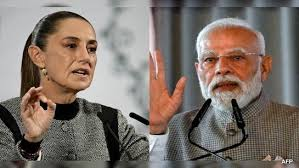
Mexico Approves Sweeping Tariff Hikes on Asian Imports
In a severe blow to India’s burgeoning export sector, the Mexican Senate has approved a comprehensive tariff overhaul, imposing duties of up to 50% on a wide range of imports from countries without a Free Trade Agreement (FTA), including India, China, South Korea, and Thailand. Set to take effect on January 1, 2026, the new regime covers over 1,400 product lines, primarily focusing on textiles, steel, auto parts, plastics, and clothing.
This measure is part of Mexican President Claudia Sheinbaum’s commitment to protect domestic manufacturing and create jobs. However, the move has immediately placed over $1 billion of India’s annual exports to Mexico—a crucial market in the Americas—under severe risk, forcing Indian exporters to rapidly reassess their market strategy.
Indian Automobile Exports Face 50% Duty Shock
The sector facing the most immediate and devastating impact is the Indian automobile industry. Under the new rules, the import duty on passenger cars will surge from a current 20% to the maximum of 50%. Mexico is India’s third-largest market for car exports, with Indian automakers like Volkswagen, Hyundai, and Nissan shipping vehicles worth close to $1 billion annually. Industry bodies, including the Society of Indian Automobile Manufacturers (SIAM), had lobbied the Indian Commerce Ministry to intervene, warning that the increase renders Indian-made compact cars uncompetitive almost overnight.
Beyond vehicles, the tariffs will also hit India’s significant exports of:
- Iron and Steel: Facing duties of 35% to 40%.
- Auto Components & Parts: Hit with tariffs between 25% and 50%.
- Textiles and Footwear: Subject to duties ranging from 30% to 35%.
Geopolitical Factors Overshadow Trade Policy
While the Mexican government cites the need to protect local industry from cheap Asian imports, analysts widely view the move through a geopolitical lens. The tariff hike is strategically timed just months ahead of the next review of the United States-Mexico-Canada Agreement (USMCA). Washington, particularly under President Trump, has repeatedly pressured Mexico to curb the flow of Asian goods allegedly being “trans-shipped” or re-routed through Mexico to bypass U.S. tariffs.
By imposing these duties on non-FTA countries, Mexico is seen to be preemptively appeasing the United States, showcasing its commitment to aligning trade barriers and avoiding potential U.S. tariffs on Mexican goods. For India, this marks the second major tariff imposition in months, following the steep duties levied by the Trump administration, intensifying the call for New Delhi to accelerate negotiations for a comprehensive Free Trade Agreement with Mexico to safeguard its vital market access.