
China’s ‘Manhattan Project’: Beijing Unveils Secret Prototype to Break West’s AI Chip Monopoly
State-Led Breakthrough in Shenzhen Signals End of Western Tech Hegemony; Former ASML Engineers Recruited Under Aliases to Build EUV Machine
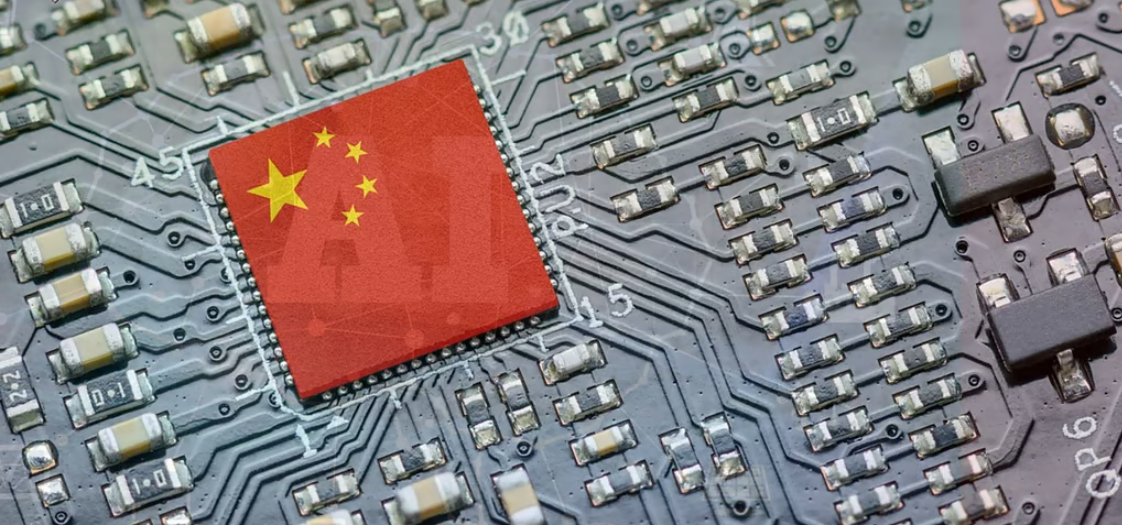
SHENZHEN — In a move that directly challenges years of U.S.-led export controls, Chinese scientists have reportedly completed a functional prototype of an Extreme Ultraviolet (EUV) lithography machine. This clandestine project, described by insiders as “China’s Manhattan Project,” aims to produce the high-end semiconductors required for next-generation Artificial Intelligence, advanced smartphones, and hypersonic weaponry—technologies currently dependent on Western supply chains.
The Secret Lab: Aliases, Cameras, and Reverse-Engineering
Operating inside a high-security facility in Shenzhen, the project utilized a “thousand-talent” strategy to recruit former employees from ASML, the world’s sole provider of EUV tools. Reports indicate that these engineers work under false identities to evade international detection, with their every move monitored by individual cameras to document the reverse-engineering of critical components.
While the Dutch giant ASML has previously stated that such technology would take “decades” to replicate, the existence of a prototype generating EUV light suggests China has compressed a 15-year development cycle into just six.
Technical Hurdles and the 2028 Goal
The Chinese prototype is described as “crude but functional,” filling an entire factory floor—significantly larger than the bus-sized machines produced by ASML. While the system can generate the necessary light, it currently faces challenges in precision optics, a sector dominated by German firms like Zeiss.
However, Beijing has set a defiant timeline:
- 2025: Operational prototype testing (Achieved).
- 2028: Initial production of working chips.
- 2030: Full-scale commercialization and “100% decoupling” from U.S. supply chains.
Geopolitical Fallout: The End of Export Controls?
For Washington, this development represents a major failure of the “Small Yard, High Fence” policy. By sourcing restricted parts through secondary markets and Alibaba auctions, China has effectively circumvented multi-lateral trade barriers.
“The goal is simple,” said a source close to the project. “China wants the United States completely kicked out of its supply chains. This machine is the silver bullet to achieve that.”