
Kozhikode on High Alert: Emergency Containment Activated Following Confirmation of Fresh Nipah Case
The medical emergency escalated rapidly when a 43-year-old patient developed severe clinical symptoms. He is a small business operator from Ramanattukara. His symptoms point directly to the dangerous Henipavirus.
Local health workers conducted early epidemiological investigations. They discovered that the patient recently rented and cleaned an old godown near Feroke. This disused commercial structure harboured a heavy population of fruit bats (Pteropus medius). Crucially, these bats serve as the primary natural reservoir for the Nipah virus globally.
Initially, the individual suffered from a standard high fever, which briefly subsided before aggressively returning along with complex neurological complications. The patient subsequently developed severe confusion and acute behavioural alterations. Because of this, family members moved him to multiple local healthcare clinics. Finally, clinicians suspected a viral encephalitis pattern. At midnight, the Kozhikode Medical College laboratory confirmed a preliminary positive screening. Following this, workers immediately sent his biological samples to India’s apex testing facility. A fast-track courier transported the samples directly to NIV Pune. Ultimately, NIV Pune delivered the final positive confirmation.
Rapid Response: 77 Contacts Under Strict Surveillance
To prevent a wider community outbreak, the district administration of Kozhikode has implemented a multi-tiered contact monitoring framework. Health authorities have carefully compiled a comprehensive route map detailing every location the patient visited over the past fortnight. Consequently, the traced directory includes:
- 2 Highest-Risk Contacts: Close family relatives showing immediate proximity.
- 13 High-Risk Contacts: Primary healthcare workers, clinic staff, and hospital bystanders who handled the patient during his initial visits.
- 62 Low-Risk Contacts: Secondary individuals or casual acquaintances monitored via daily tele-health calls.
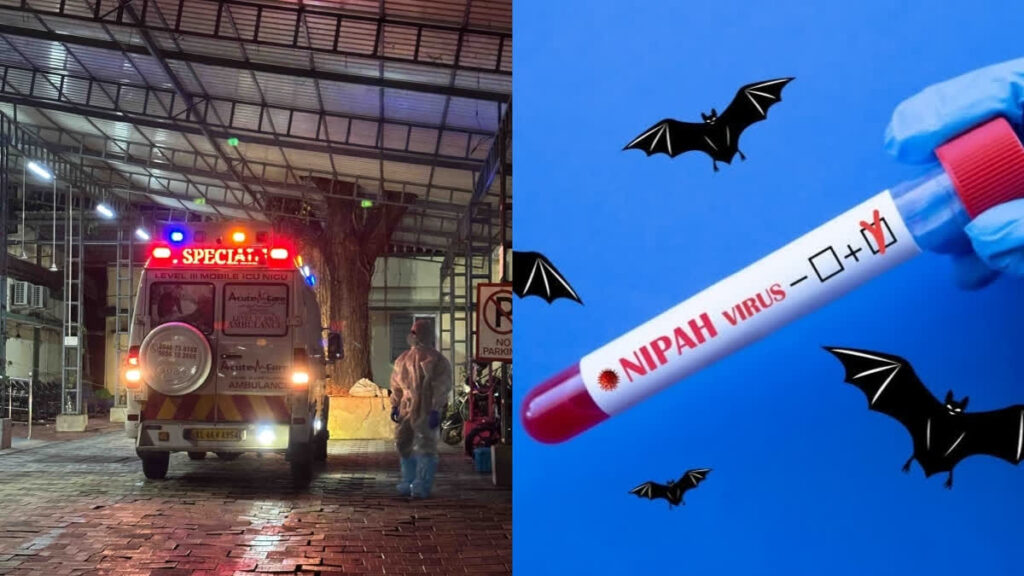
Containment Measures Triggered at Epicentre
Because the Nipah virus carries a exceptionally high case-fatality rate estimated between 40% to 75% by the World Health Organization (WHO), the regional administration has set up tight perimeter security around the suspected infection points. Police forces have blocked off public vehicle parking slots and high-traffic pathways directly adjacent to the isolated wards of the Kozhikode Medical College.
Furthermore, local panchayat bodies near Feroke and Ramanattukara have enforced strict behavioral health mandates. Residents in the designated containment zones have been explicitly ordered to maintain rigorous social distancing and wear high-grade masks in public spaces. The health department has also directed field workers to distribute preventative guidelines to local Anganwadi centres and municipal offices to identify any early cluster patterns of unexplained fever.
Conclusion
The return of the Nipah virus to Kozhikode highlights the recurring environmental risk present at the interface where human settlements meet natural fruit bat ecosystems in northern Kerala. However, the state’s prior experience dealing with outbreaks in 2018, 2021, and 2023 has allowed for the rapid execution of containment protocols without causing widespread panic. While the index patient remains under critical intensive care, the state’s strategy of aggressive contact tracing, strict quarantine zones, and swift laboratory isolation remains the primary defence against this lethal pathogen.