
Critical Strait of Hormuz Standoff: French Transit Sparks Hope as Iran Weighs Trump’s Peace Deal
A French container ship successfully crossed the Strait of Hormuz. This rare transit signals a possible shift in the month-long blockade. Meanwhile, Iran has begun reviewing a high-stakes U.S. peace proposal.
The Hormuz Breakthrough
The CMA CGM Saigon reached the Arabian Sea on Thursday. It had vanished from tracking systems while crossing the Persian Gulf. This is one of the few Western vessels to pass through safely since the March blockade began.
This success follows a period of extreme danger. Earlier this week, an Iranian projectile hit the San Antonio, another French ship. That attack injured the crew and caused heavy damage. French officials noted the ship lacked a U.S. naval escort, proving that independent traffic remains at high risk.
Trump Pressures for “Complete and Final” Agreement
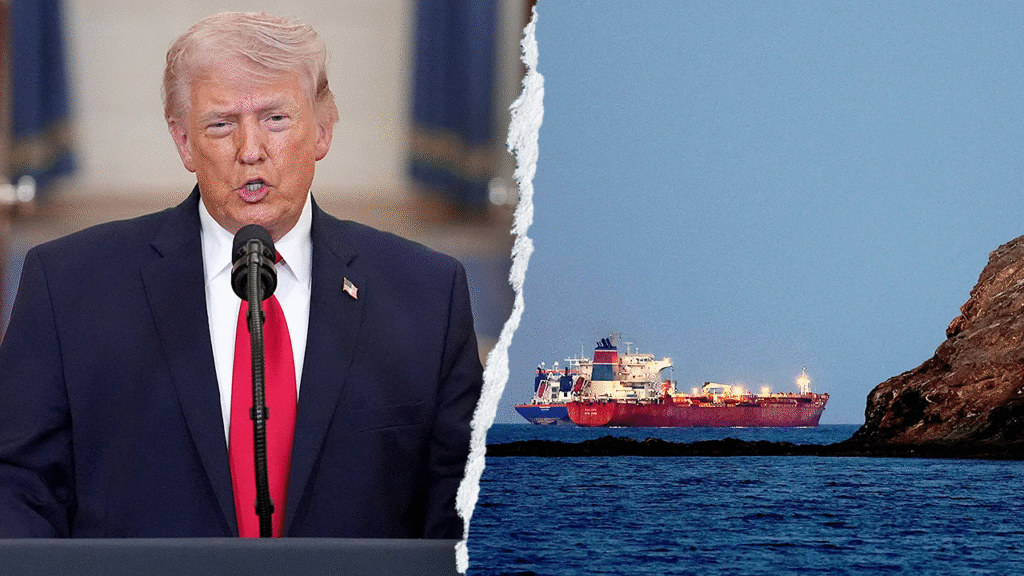
U.S. President Donald Trump has temporarily paused “Project Freedom”—a short-lived naval operation to escort commercial ships—citing “great progress” in diplomatic channels mediated by Pakistan.
Despite the pause, the U.S. continues to enforce a strict blockade of Iranian ports. On Wednesday, a U.S. F/A-18 Super Hornet disabled the Iranian-flagged oil tanker Hasna after it attempted to breach the blockade in the Gulf of Oman.
Trump’s messaging remains a blend of optimism and threat. On social media, he noted that a deal is “very possible” but warned that if Tehran does not agree to terms, “the bombing starts” at a level of intensity far higher than previous strikes.
Iran’s Response: Reviewing the 30-Day Framework
Iran’s Foreign Ministry confirmed it is reviewing the U.S. proposal, which reportedly outlines a phased de-escalation framework. Key Iranian demands include:
- A 30-day resolution window to end the war rather than simply extending the ceasefire.
- The lifting of the U.S. naval blockade and release of frozen assets.
- A decoupled negotiation approach, separating immediate maritime trade restoration from long-standing nuclear disputes.
Geopolitical Ripple Effects
The conflict has sent global energy markets into a tailspin, with Brent crude stabilizing near $100 a barrel on news of the peace talks. In the U.S., national average gasoline prices have climbed to $4.54 a gallon, piling pressure on the administration to secure a resolution.
Meanwhile, France is positioning its own military assets. For instance, the aircraft carrier Charles de Gaulle has transited the Suez Canal into the Red Sea. It is preparing for a defensive mission to secure navigation in the strait. In contrast to the U.S. operation, this French-led mission has the support of the UK and over 40 other nations. Furthermore, the coalition aims to establish a strictly defensive, post-conflict security framework.