
🇧🇩 Bangladesh’s Identity Crisis: 1971 Legacy Erased as Radical Shift Strains India Ties
From Removing Bangabandhu’s Portraits to the Rise of Islamist Hardliners—How the Yunus Administration is Redefining Bangladesh’s Sovereignty
Systematic Erasure of the 1971 Liberation War History
Bangladesh is witnessing a radical transformation of its national narrative under the interim administration of Dr. Muhammad Yunus. As of December 2025, the legacy of the 1971 Liberation War is being systematically sidelined. For the second year in a row, the traditional Victory Day parade on December 16 was cancelled, leaving the streets of Dhaka silent.
The most visible sign of this “history erasure” is the removal of Sheikh Mujibur Rahman’s portraits from public spaces, government offices, and even the national currency. Critics and members of the Awami League allege that these moves are not mere bureaucratic changes but a deliberate ideological mission to weaken the emotional connection to the 1971 struggle and appease pro-Pakistan factions.
Rising Influence of Radical Islamist Elements
Since the ouster of the previous regime in August 2024, hardline Islamist groups have made a significant public comeback. Groups like Hizb ut-Tahrir and Ansar al Islam, once suppressed, are now reportedly reassembling and demanding the revocation of bans. This shift has coincided with a spike in mob violence and targeted attacks on religious minorities, particularly the Hindu community.
International observers have noted that over 5,800 weapons looted during the 2024 uprising remain missing, many believed to be in the hands of extremist modules. The inclusion of hardline figures in administrative discussions has raised alarms in New Delhi and the West about the future of Bangladesh’s secular principles.
The ‘Greater Bangladesh’ Map Controversy and India’s Response
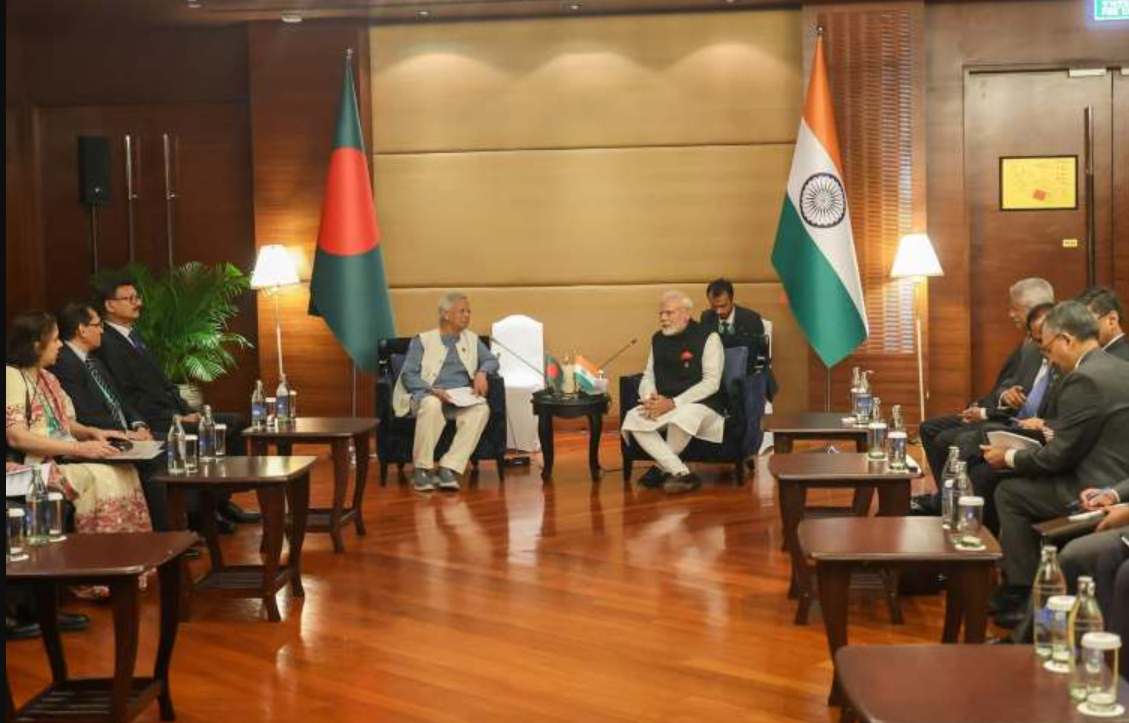
Diplomatic relations between New Delhi and Dhaka have reached a historic low. A major flashpoint occurred when Chief Adviser Muhammad Yunus presented an artwork titled “Art of Triumph” to a top Pakistani military official. The artwork depicted a distorted map—referred to in Indian media as the “Greater Bangladesh” map—which included parts of India’s Northeast.
Indian officials, including Assam CM Himanta Biswa Sarma, have condemned these provocations as threats to the Siliguri Corridor (Chicken’s Neck). As Bangladesh gears up for the February 2026 elections, the rhetoric from Dhaka continues to pivot away from its historical ally, India, and closer toward a burgeoning “anti-India front” involving shifted regional alliances.