
Export Powerhouse: India Defies Trump’s 50% Tariffs as November Shipments Hit 10-Year High
New Delhi’s ‘EU Pivot’ and Breakthrough FTA Talks Neutralize U.S. Trade Pressure; Electronics and Engineering Sectors Lead $38 Billion Surge
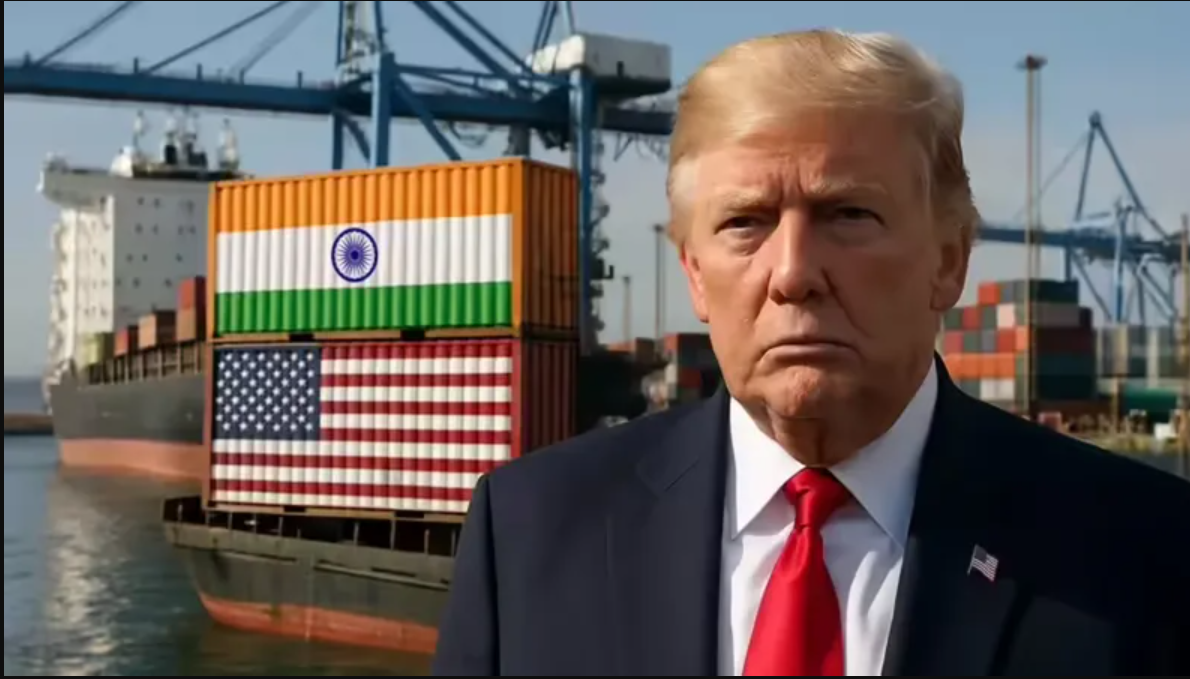
India’s Export Resilience Shakes Global Trade Markets
In a stunning display of economic resilience, India’s merchandise exports reached a 10-year high of $38.13 billion in November 2025. This surge effectively neutralizes the initial shock of the Trump administration’s 50% tariffs, which were designed to pressure New Delhi over its trade policies and Russian oil imports. While October saw a temporary dip, November’s data signals that Indian exporters have successfully adapted by absorbing costs and diversifying their product mix.
Commerce Secretary Rajesh Agrawal confirmed that India has “never crossed the $38 billion mark” in any previous November. The growth was spearheaded by high-value sectors, including Electronic Goods (39% growth) and Engineering Goods (23.8% growth). This performance suggests that global demand for Indian manufacturing—supported by the Production Linked Incentive (PLI) schemes—remains inelastic even under heavy protectionist pressure from Washington.
Strategic Leverage: The EU FTA Breakthrough
While the U.S. remains India’s largest trading partner, New Delhi is swiftly moving to weaken American leverage through the India-EU Free Trade Agreement (FTA). Following a successful round of negotiations in New Delhi last month, the EU and India are on track to finalize the historic pact by the January 2026 summit.
By securing duty-free access to the European market, India is creating a massive alternative to U.S. consumers. This strategic “de-risking” allows Indian negotiators to remain firm in bilateral talks with U.S. Trade Representatives. EU leaders have reportedly recognized India as a “stable, less demanding partner” compared to the unpredictable trade climate in the U.S., making the FTA a critical shield against global tariff wars.
Narrowing Deficit and Market Diversification
The November trade data also brought relief to India’s current account, as the trade deficit narrowed to a five-month low of $24.53 billion. This improvement was fueled by a sharp contraction in non-essential imports, including a massive 60% decline in gold imports following the festive season.
Furthermore, India’s diversification strategy is yielding results beyond the West. Exports to China rose by 32.8% during the April-November period, while trade with the UAE and the Netherlands remains robust. As India ramps up its Export Promotion Mission (EPM) with an outlay of ₹25,060 crore, the nation is positioning itself as a modern, technology-driven alternative to China, effectively navigating the complexities of the “Trump Tariff” era.