Anchor of Stability: India-Russia Forge 2030 Economic Roadmap, Ink 16 Agreements
Putin-Modi Summit Reaffirms Strategic Partnership on 25th Anniversary; Deals Signed in Defence, Energy, Labour Mobility, and Arctic Cooperation.
23rd Annual Summit: A Decisive Display of Partnership
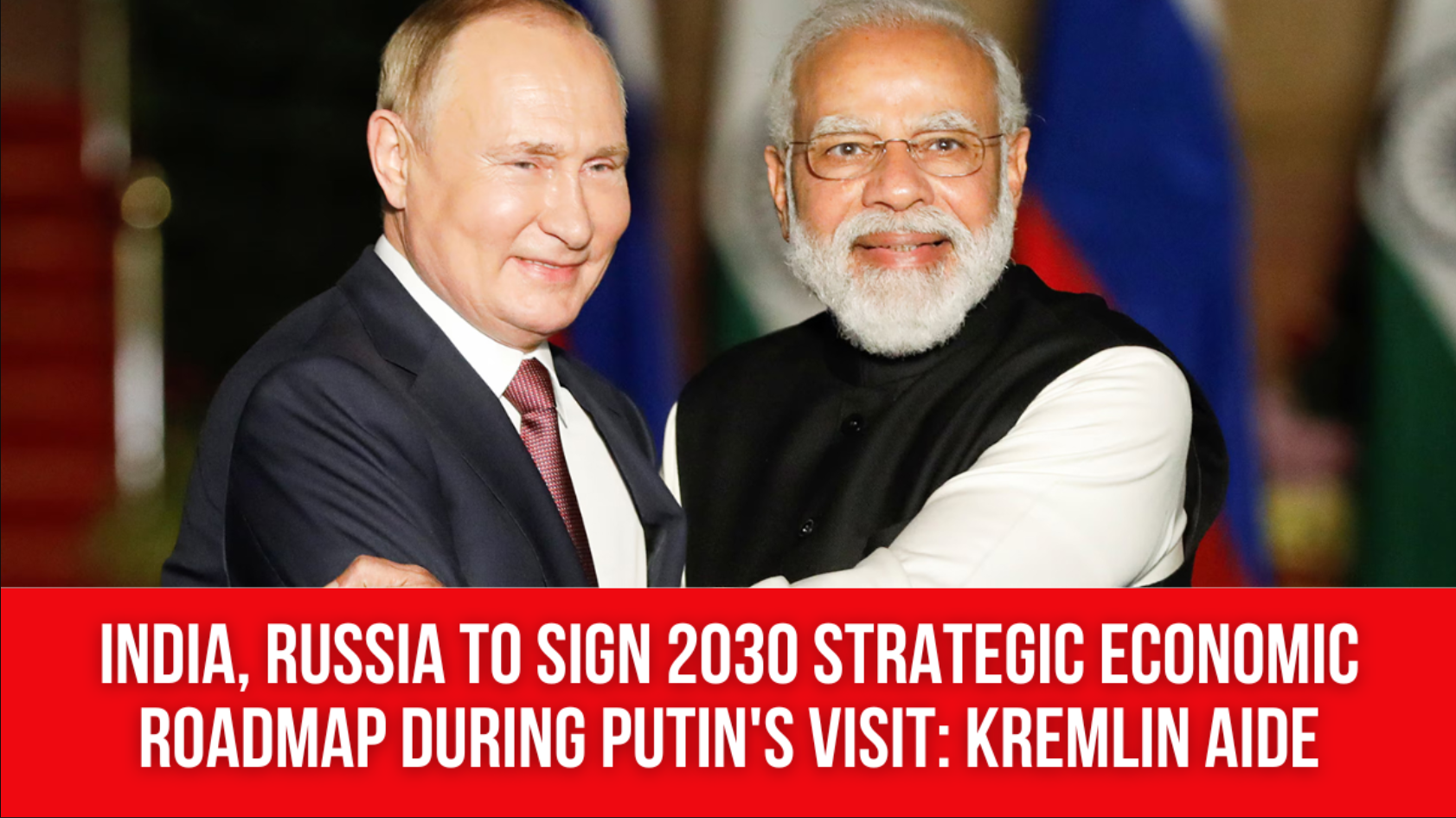
Russian President Vladimir Putin concluded a two-day state visit to New Delhi yesterday, attending the 23rd India–Russia Annual Summit with Prime Minister Narendra Modi. The summit, which marked the 25th anniversary of the bilateral Strategic Partnership, proved to be a critical exercise in deepening cooperation amidst a complex global geopolitical environment. The leaders reaffirmed the “Special and Privileged Strategic Partnership,” characterizing it as an “anchor of global peace and stability.” A total of 16 agreements were signed across diverse sectors, signalling a concerted effort to expand the relationship beyond traditional military and energy ties.
The cornerstone outcome of the summit was the adoption of the “Programme for the Development of Strategic Areas of India – Russia Economic Cooperation till 2030” (Programme 2030). This ambitious roadmap sets a target of $100 billion in annual bilateral trade by the end of the decade, aiming to diversify trade, boost Indian exports, and strengthen industrial collaboration.
Strategic Diversification and Key Agreements
While defence cooperation remains robust—with a focus on joint manufacturing under the Make in India initiative and technology transfer—the new agreements significantly diversified the scope of the partnership:
- Labour Mobility: A key agreement was signed to facilitate the temporary labour activity of citizens, enabling skilled Indian workers to take up employment in Russia and addressing Russia’s projected labour shortages.
- Economic & Trade: Both leaders pushed for the early conclusion of a Free Trade Agreement between India and the Eurasian Economic Union (EAEU), alongside measures to ease logistical bottlenecks in the International North-South Transport Corridor (INSTC).
- Energy & Fertilizers: Agreements were finalized to enhance cooperation in the nuclear energy sector, including life-cycle support for the Kudankulam Nuclear Power Plant (KKNPP). A crucial Memorandum of Understanding (MoU) was signed for Indian companies to pursue a joint venture in urea manufacturing in Russia, securing India’s fertilizer supply chain.
- Connectivity and Polar Waters: Cooperation was expanded in maritime and polar waters, including the training of Indian seafarers for operations in the Arctic’s Northern Sea Route, strengthening India’s engagement in the strategically important region.
- Visa Regime: To boost tourism and people-to-people ties, India announced the launch of a free 30-day e-tourist visa and a 30-day Group Tourist Visa for Russian citizens on a reciprocal basis.
Navigating Global Challenges and Geopolitical Signals
The joint statement indirectly addressed external pressures, emphasizing the need for open, non-discriminatory trade systems and a commitment to combating global terrorism. While the ongoing conflict in Ukraine was discussed, Prime Minister Modi reiterated India’s long-standing position on the need for a peaceful resolution. The comprehensive nature of the agreements, particularly the focus on the 2030 economic goals and labour mobility, sends a powerful signal of the enduring nature of the India-Russia relationship and its resilience in the face of geopolitical headwinds.