
⚔️ Apex Commander: Field Marshal Asim Munir Appointed Pakistan’s First Chief of Defence Forces
Historic Military Overhaul Consolidates Tri-Service Command, Making Munir the Supreme Head of the Armed Forces and Nuclear Strategy
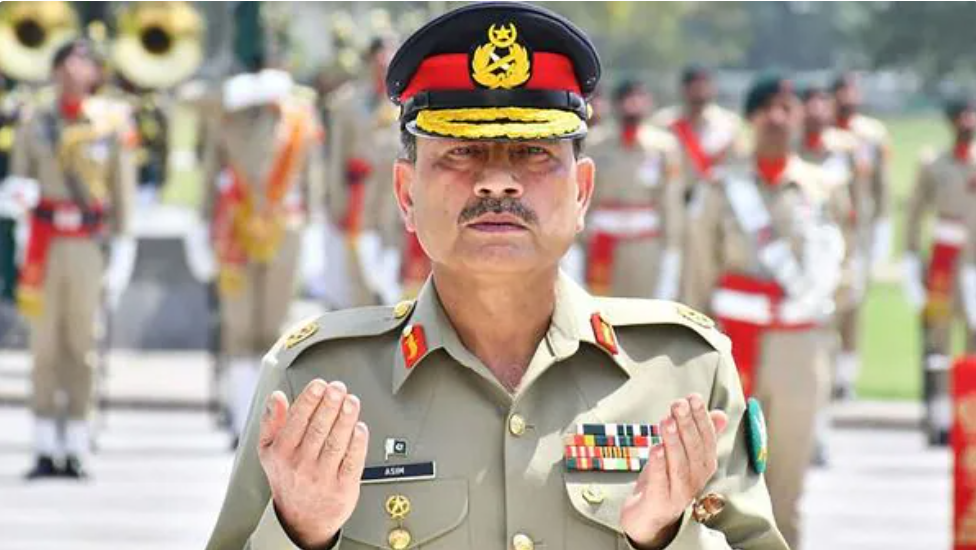
A New Era of Military Command: The Birth of the CDF
In a landmark decision marking the biggest structural change to Pakistan’s defence establishment since the 1970s, President Asif Ali Zardari formally approved the appointment of Field Marshal Syed Asim Munir as the country’s first Chief of Defence Forces (CDF). The official notification, issued yesterday (December 4, 2025), confirms that Munir, who is concurrently serving as the Chief of the Army Staff (COAS) and holds the rare rank of Field Marshal, will assume the newly created and highly powerful dual role for a period of five years.
This pivotal development follows the recent passage of the 27th Constitutional Amendment, which legislated the creation of the CDF post. The primary objective of the Chief of Defence Forces role is to achieve unity of command, enhance jointness among the Army, Navy, and Air Force, and streamline decision-making in critical situations. The new position effectively replaces the former, less authoritative, office of the Chairman, Joint Chiefs of Staff Committee (CJCSC), which has now been formally abolished.
Consolidation of Power and Strategic Authority
The appointment hands Field Marshal Asim Munir unprecedented operational, administrative, and strategic authority over all three branches of the military. Critically, the CDF will also command Pakistan’s powerful National Strategic Command (NSC), giving the position ultimate control over the country’s nuclear assets and strategic deterrence policy. This consolidation of power under one leader, who simultaneously remains the Chief of the Army Staff, makes Munir the undisputed supreme commander of Pakistan’s armed forces.
The appointment ends weeks of intense speculation regarding the notification’s delay, which had followed the retirement of the last CJCSC, General Sahir Shamshad Mirza. The government attributed the delay to procedural requirements following the constitutional amendment. Political analysts, however, noted the sensitivity of the move, which effectively extends Munir’s tenure and further entrenches the military’s institutional dominance within Pakistan’s political landscape.
The Future of Pakistan’s Defence Structure
The structural overhaul is aimed at fostering an integrated warfighting capability essential for modern, multi-domain warfare. Alongside Munir’s appointment, the President also approved a two-year service extension for Air Chief Marshal Zaheer Ahmad Babar Sidhu, the Chief of Air Staff, effective from March 2026. This stabilisation of the top military brass signals the Shehbaz Sharif government’s full endorsement of the new defence architecture.
While government supporters argue the move strengthens Pakistan’s defence posture against external threats, critics have raised concerns over the unprecedented concentration of constitutional and operational power in the hands of a single military officer. The newly established Chief of Defence Forces role will fundamentally redefine civil-military relations and the dynamics of national security governance for years to come.